
Raising Diverse Ownership to 26% and Women Tour Leaders to 38%: How Intrepid Harnesses Tourism for Inclusive Impact
Start Reading

1. Company at a Glance
This case study explores how Intrepid Travel, a global, purpose-led experiential travel company, launched a global initiative to measure and increase diverse ownership across its 10,000+ suppliers and improve gender representation among its tour leaders.
It expands opportunities for women, ethnically diverse groups, and First Nations-owned businesses in its procurement decisions and sets ambitious inclusion targets, demonstrating how a travel company can deepen the positive economic and social impact of tourism while staying true to its mission of creating positive change through the joy of travel.
Travel & Tourism
Industry
1989
Founded
3,000+
Number of Employees
Australia
Headquarters
Operations in 117 countries and more than 30 offices worldwide
Global Presence:
2. The Challenge
Since being founded in 1989, Intrepid has worked with local, often family-run businesses to deliver authentic travel experiences for its customers. However, despite this focus, the company lacked full visibility of the diversity of ownership in its vast supply chain and had low female representation among tour leaders. With suppliers ranging from city hotels to remote teahouses and tuk-tuk drivers across more than 100 countries, measuring and improving diverse ownership (women, ethnically diverse groups, and First Nations people) presented a significant challenge, especially given varying levels of sophistication, language barriers and data collection capacity.
3. The Action
Baseline Measurement
In 2021, Intrepid launched a structured initiative to understand who benefits economically from its global operations by measuring the diversity of supplier ownership across 19 countries and linking this insight to its procurement spend. This first assessment established that 17% of its suppliers were women or ethnically diverse-owned, and that women represented 29% of its tour leaders, providing a clear baseline for future action.
Building on this insight, Intrepid began integrating ownership and business structure data into its systems across more than 32 Intrepid operations worldwide. This allowed the company to track the local economic impact of its supply chain, including the percentage of suppliers that are locally owned, women-led or owned by Indigenous and ethnic minority groups.
Target-Setting and Policy Update
In 2022, Intrepid translated the baseline into concrete impact targets. Country offices were challenged to increase the share of women in their tour leader pool to between 40% and 50%, depending on local context, while the business set a global ambition to increase diverse supplier ownership over time.
To embed these goals, Intrepid updated its Responsible Purchasing Policy to guide employees to actively prioritise diverse and inclusive suppliers in procurement decisions. The company also created a dedicated Global Procurement function and a Responsible Supply Chain Manager role to standardise processes, drive innovation and ensure that diversity and inclusion targets are reflected in everyday purchasing
Supplier Diversity Programme Launch
With clearer goals and policies in place, Intrepid launched a cross-functional supplier diversity programme. Purchasing, Product, Operations, People and Purpose teams worked hand-in-hand with local offices and destination managers to identify, engage and contract diverse suppliers on the ground.
Internal buy-in was built by positioning the programme as a natural extension of Intrepid’s impact commitments and certification journey. Framing supplier diversity as a practical way to strengthen the company’s positive impact — through core business decisions such as product design and supplier selection — helped teams understand its relevance early, even before commercial results were visible.
The company adapted its tech platforms so that supplier diversity attributes could be recorded against each supplier and integrated with finance data. A new reporting dashboard allowed teams to monitor spending with women-owned, ethnically diverse and Indigenous or First Nations suppliers and to assess the economic value generated by these relationships.
Tour Leader Gender Parity Push
In parallel, Intrepid focused on closing the gender gap in tour leadership, aiming to use its core product — trips — as a vehicle for positive change in tourism. The company designed targeted initiatives to attract, train and retain more women as tour leaders, with a particular focus on markets where structural barriers are highest.
One flagship approach has been Intrepid’s Women’s Expeditions range, launched in 2018 in destinations such as India, Nepal and Morocco. These trips are designed for women travellers, led by women tour leaders and centred on women-owned businesses and experiences, creating safe spaces, breaking down social barriers and providing direct income opportunities for local women.
Intrepid has continued to invest in and innovate this range. In 2024, it launched a new Women’s Expedition in Saudi Arabia with a female-owned local operator, co-designing an itinerary that allows travellers to experience the country through the perspectives of local women — from home-hosted meals and locally run experiences to stays in women-owned boutique accommodation.
Localised Actions to Remove Barriers
Intrepid adopted a localised approach to remove barriers for women tour leaders, tailoring actions to each market’s regulations and cultural context.
- Morocco: After Intrepid’s advocacy efforts, the Moroccan government opened the national tour guide exam to women in 2017. When the exam was held again in 2023, Intrepid launched an awareness campaign to encourage women to apply (earning coverage across national newspapers, women’s media, radio and podcasts). The Intrepid Morocco team also offered a free, intensive two day pre-exam training with mentorship for 24 women, including accommodation for those travelling from outside Marrakech. As a result, 10 women obtainedtheir tour guide licences.
- Nepal: With only 4% of trained tour guides, trekking guides and porters in Nepal being female (NATHM data), Intrepid prioritised female crew members through targeted recruitment and assignment practices, increasing women’s representation from just over 5% (2022) to 12% (2024).
- India: In a context where women’s labour force participation is 27%, Intrepid increased female tour leader representation to ~40% through targeted recruitment and by shaping trip operations and product delivery to create more accessible pathways for women tour leaders (e.g., aligning routes, schedules and on-the-ground support with local realities).
- Sri Lanka: In partnership with the Australian government’s Market Development Facility (MDF), Intrepid launched a programme in April 2024 to address the shortage of women tour leaders and women-owned experiences. To date, 18 women have been trained in tour guiding, and 38 women tourism business owners have received training to run sustainable tourism businesses.
Ethical Marketing and Partnerships
Finally, Intrepid recognised that changing who benefits from tourism must go hand-in-hand with changing how travel is portrayed. The company introduced Ethical Marketing Guidelines that commit it to more inclusive and representative storytelling, both in front of and behind the camera. Intrepid now measures and reports on its progress through its Integrated Annual Report, including the share of BIPOC (Black, Indigenous, and People of Color) creators and writers it works with and its investment in BIPOC-owned businesses and partnerships. This reinforces the company’s broader commitment to diversity, equity and inclusion and helps shift narratives across the wider travel industry.
4. Overcoming Barriers
The sheer size and diversity of Intrepid’s supply chain (10,000+ suppliers in over 100 countries), varying levels of digital literacy and access, and initially manual data collection processes were the main obstacles in its supply chain transparency and impact.
These were addressed by keeping surveys simple, starting small, tracking progress quarterly, and relying heavily on local offices and managers who understand context and relationships on the ground. A major ongoing technology upgrade will further streamline future measurement.
With its gender equality work with tour leaders, Intrepid found that varying local regulations meant it needed to take a localised approach in each country. It has found success through partnering with government organisations and other local partners.
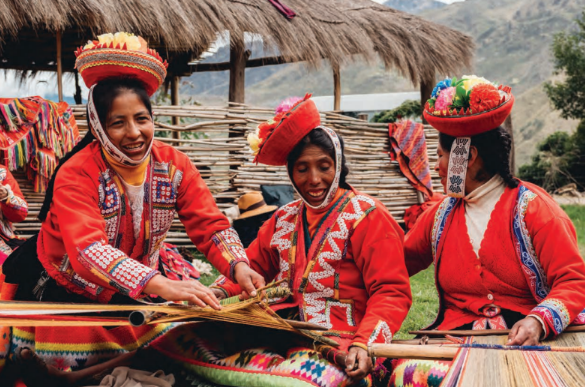
Read more real stories of women breaking social barriers to enter the industry.
5. Impacts & Results
Women and ethnic minority-owned suppliers rose from 17 % (2021) to 20 % (2023), reaching 22 % when including new destinations; diverse ownership (including Indigenous/First Nations) stands at 26–27%.
In 2024, 58% of all influencers Intrepid worked with were BIPOC creators, 52% of all writers commissioned on The Good Times (Intrepid’s blog and digital publication) were BIPOC writers and Intrepid invested over $200,000 in BIPOC-owned business and partnerships, double its committed spend.
Female tour leaders increased from 29% (2021) to 38% (August 2024), with standout progress in Nepal (5% 12%), India (40% female tour leaders in 2024), and Morocco (10 new licensed female guides in 2023).
105 Indigenous and First Nations experiences now feature on itineraries (50 in Australia alone, up from 12 in 2020).
Procurement spend with Australian First Nations suppliers grew 16% year-on-year (2024 to 2025), increasing from AUD$606K to AUD$703K.
Intrepid’s reputation has been greatly enhanced through these and other efforts. It was named in 2023 as one of TIME’s Most Influential Companies in the World.
Stronger customer trust, improved post-trip feedback, higher employee engagement scores, and new strategic partnerships with First Nations suppliers in Australia.
6. Company Commitment
Intrepid Travel has been a committed participant in several UN Global Compact initiatives since 2008:
Member of the UN Global Compact’s Coalition for Sustainable Procurement.
Contributor to the CMO Blueprint for Sustainable Growth
Signatory of the Forward Faster initiative in Living Wage (target 1) and Climate Change
Founding Supporter of UN Global Compact Network Australia
7. Key Lessons Learned
Diversity in the supply chain can strengthen the customer offer by unlocking more distinctive, locally rooted experiences.
There is no perfect way to tackle a global project of this scale, especially when working with small, local businesses. Success depends on tailoring initiatives to the local context and challenges. It is key to engage local teams and managers who understand their destinations deeply.
Diversity unlocks innovation in trip design and delivery. It helps identify practical operational changes that remove barriers and expand who can participate and benefit.
Continuous education is essential to sustain change. It was critical that contracting managers understood the project and that their role was reinforced consistently throughout implementation.
"The company is doubling down on our efforts and deepening our commitment to inclusive growth, where purpose and profit go hand in hand. We hope to build on this momentum and continue to use business as a force for good. The UN Global Compact Network Australia is an important partner for helping to foster connections and learnings within the country"
Meegan Marshall, Chief People and Purpose Officer, Intrepid Travel
8. Recommended Resources
Recommended United Nations Global Compact Resources


Download Case Study
Disclaimer: This case example is intended strictly for learning purposes and does not constitute an endorsement of the individual companies by the United Nations Global Compact.