
Mobilizing $3.27B through 20,000 neighborhood agents to drive inclusive banking in Ecuador
Start Reading

1. Company at a Glance
In this case study, we examine how Banco Guayaquil deployed Ecuador’s largest non-banking correspondent network, Banco del Barrio (Neighborhood Bank), scaling to 20,006 active points across all 24 provinces and 100% of the country’s cantons. By empowering local shopkeepers (65% of whom are women), the initiative processed 82.8 million transactions worth USD 3,266 million in 2025, enabled 98,548 new basic accounts, and trained 6,461 operators to drive national financial inclusion.
Financial Services / Banking
Industry
1923
Founded
Guayaquil, Ecuador
Headquarters
3,114
Number of Employees
2. The Challenge
Overcoming territorial isolation and economic inequality through inclusive banking
In Ecuador, geographical, structural, and socio-economic barriers have historically excluded millions of citizens from the formal financial system. High transaction costs, long travel times to urban branches, and rigid requirements forced rural and low-income populations to rely on informal, insecure financial mechanisms, deepening regional inequalities. Meanwhile, female micro-entrepreneurs operating neighborhood shops faced systemic obstacles to securing credit, formalizing payments, and scaling their businesses.
For Banco Guayaquil, expanding physical branch networks into remote areas was operationally and economically unfeasible. To bridge this gap, the bank needed to redesign its retail model into an economically viable, highly scalable system. The goal was to dismantle geographical barriers, drive national financial inclusion, and foster female economic leadership by transforming local shopkeepers into community financial anchors.
3. The Action
Scaling Inclusive Banking through Local Micro-Entrepreneurs
To bridge territorial and economic inclusion gaps across Ecuador, Banco Guayaquil transformed its service delivery model by leveraging neighborhood micro-businesses as banking agents. The implementation of the Banco del Barrio model relies on a structured, multi-pillar strategy that integrates infrastructure, technology, gender-focused empowerment, financial education, and multi-stakeholder governance.
DESIGNING AND DEPLOYING THE NON-BANKING CORRESPONDENT NETWORK
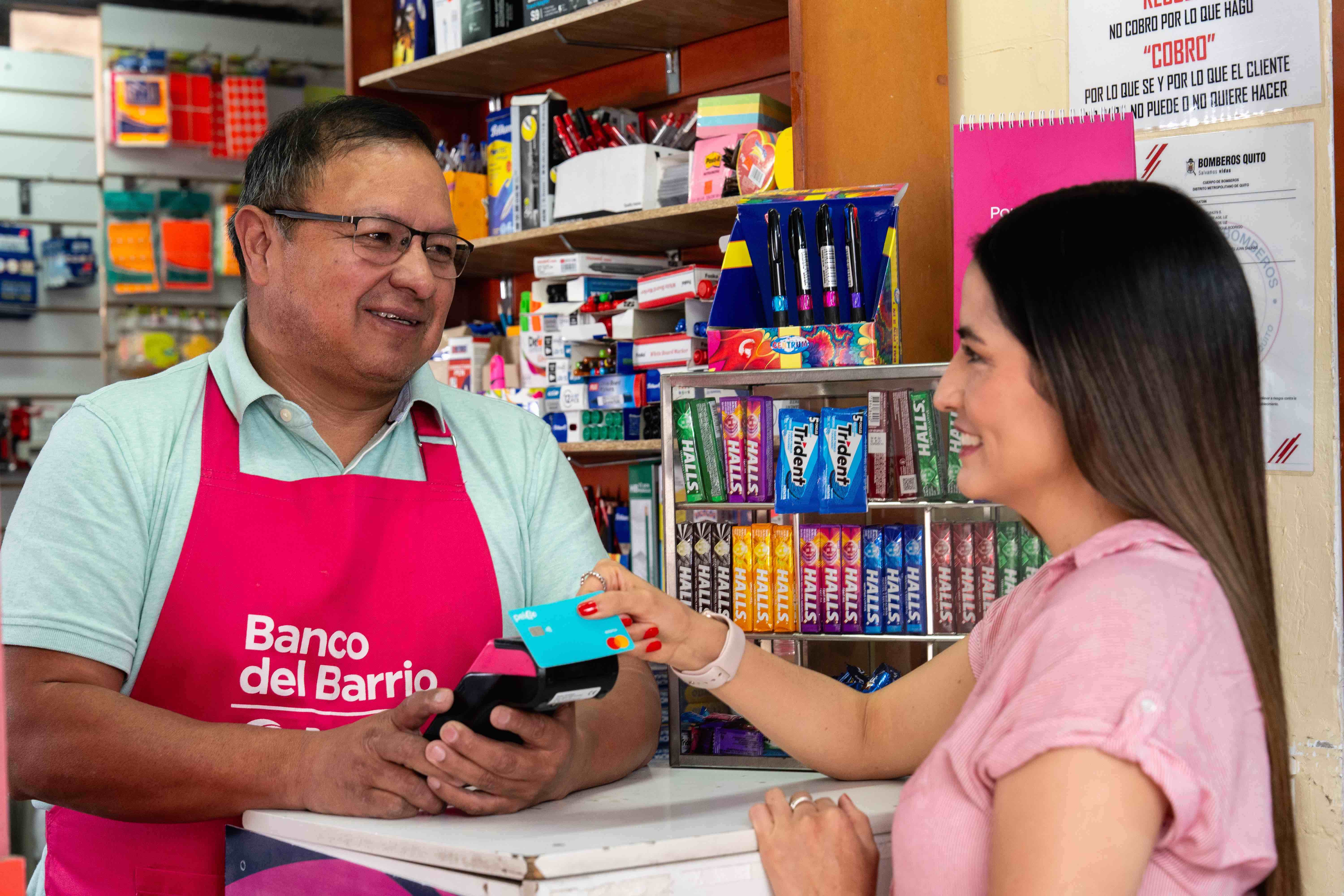
Banco Guayaquil created a decentralized operational model that establishes banking touchpoints inside existing local micro-enterprises, such as grocery stores, pharmacies, and small retail shops. The bank equips selected micro-entrepreneurs with point-of-sale (POS) terminals and secure digital connectivity, enabling them to process cash deposits, withdrawals, transfers, utility and tax payments, remittance collection, biometric social-benefit payouts, microcredit payments and basic account openings.
This capillary territorial expansion prioritized underserved regions across Ecuador, reaching a total of 20,006 active points nationwide across all 24 provinces and 100% of the country’s cantons. The network covers 96% of urban parishes (255 parishes) and 69% of rural parishes (680 parishes), drastically reducing travel costs and time for rural and peri-urban populations that historically faced severe geographical barriers to financial access.
EMPOWERING WOMEN ENTREPRENEURS AS ECONOMIC ANCHORS
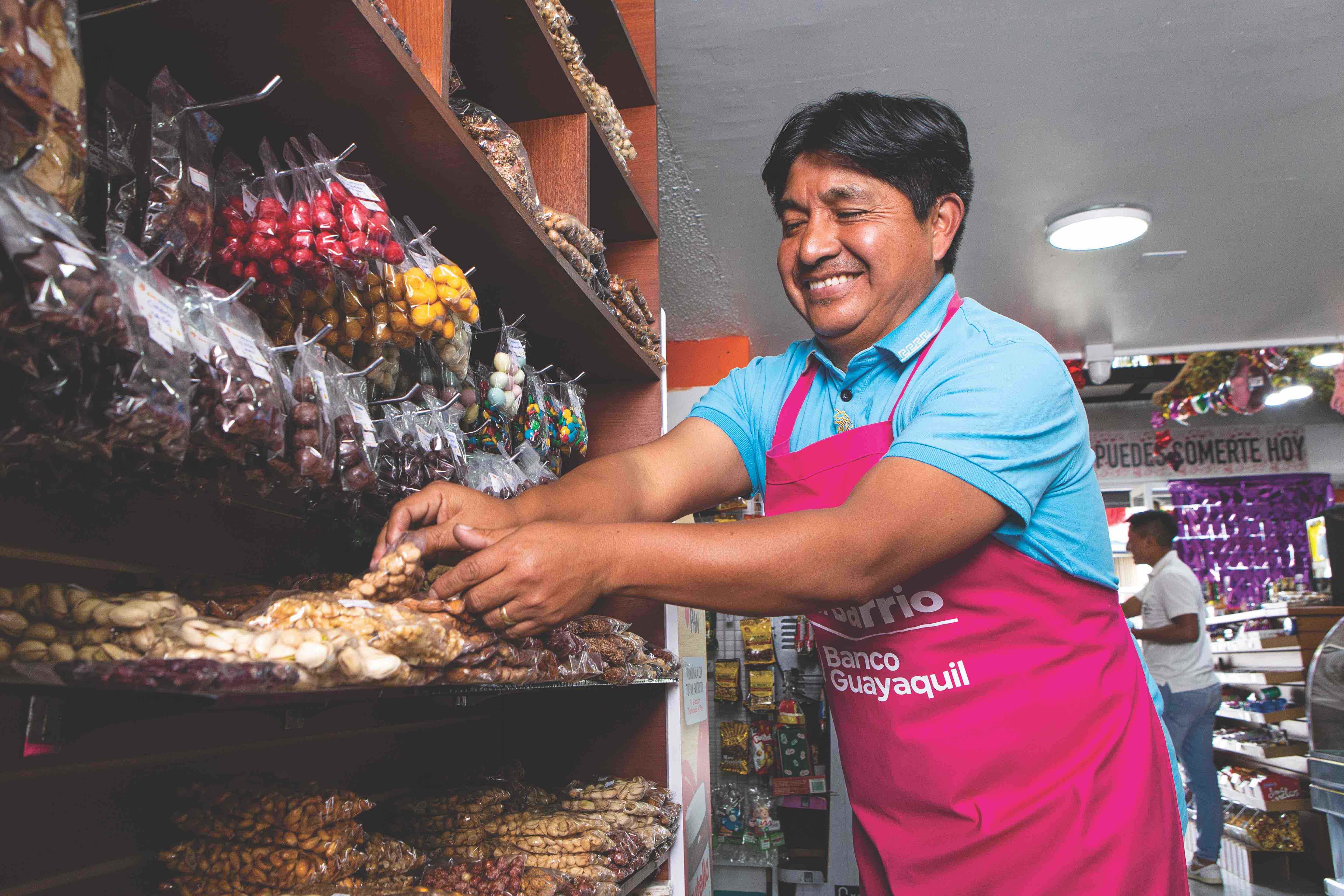
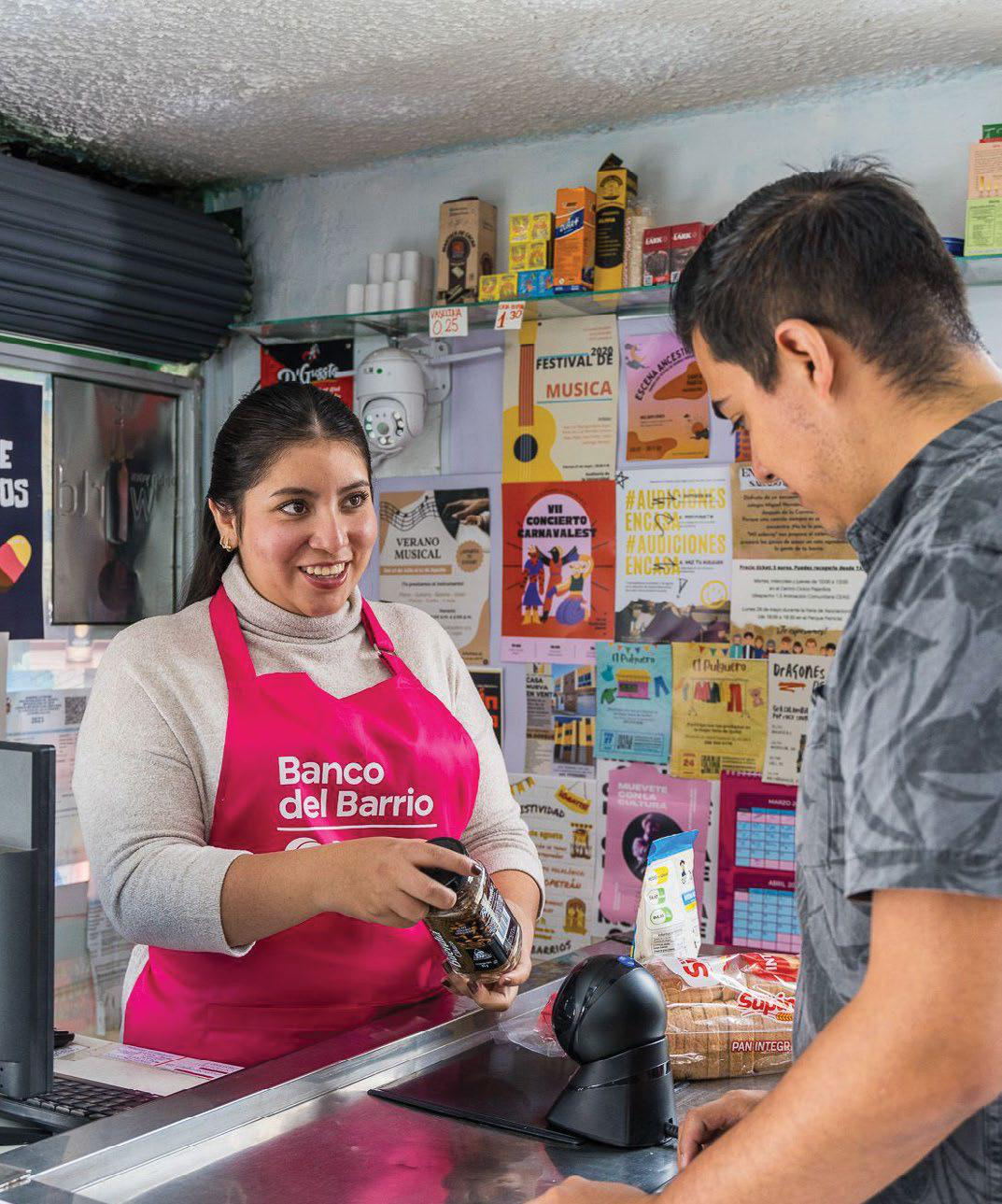
Recognizing the pivotal role of women in community resilience and local commerce, Banco Guayaquil structured the network onboarding process to actively foster female economic independence. As a result of this intentional gender focus, 65% of all active Banco del Barrio locations (representing 13,087 micro- businesses) are owned and operated by female entrepreneurs (Banqueras del Barrio). Operating a non- banking correspondent point positions female micro-entrepreneurs as trusted financial actors within their communities.
INTEGRATING ACCESSIBLE DIGITAL ACCOUNTS FOR THE UNBANKED
To transition low-income customers from basic cash transactions to formal financial inclusion, Banco Guayaquil deployed simplified digital account solutions tailored to vulnerable populations. The bank implemented a friction-free onboarding mechanism allowing customers to open basic accounts—such as the digital account PeiGo—directly at any Banco del Barrio location without visiting a traditional branch.
SCALING DIGITAL FINANCIAL EDUCATION FOR NETWORK OPERATORS
To maintain operational efficiency, mitigate transactional risks, and support long-term business growth for network agents, Banco Guayaquil established structured capacity-building initiatives. The bank launched the digital training platform “Aprendiendo para mi negocio” (Learning for My Business), structured into two core modules and six specialized sections delivered in a flexible one-hour e-learning format.
Supported by an annual budget allocation of USD 100,000 dedicated to financial education initiatives, the bank successfully trained 6,461 Banqueros del Barrio (Neighborhood Bankers). Demonstrating the gender inclusion impact of the initiative, 68% of all trained operators were women, enhancing their business management capabilities and digital literacy.
STRATEGIC MULTILATERAL PARTNERSHIPS AND CONTINUOUS GOVERNANCE
Banco Guayaquil’s funding strategy with multilateral partners reinforces its inclusion agenda. In 2025, the bank secured a USD 137.5 million syndicated loan led by CAF, alongside BIO and Proparco, to expand green financing and support women-led MSMEs.
To ensure quality service delivery and community trust, the bank maintains specialized governance protocols and dedicated field executive oversight. Stakeholder engagement is continuously sustained through local networking meetings, structured training sessions, focus groups, and automated multi- channel support via WhatsApp and Facebook Messenger to resolve operational inquiries and incorporate feedback from local communities.
4. Overcoming Barriers
Infrastructure and Digital Connectivity in Remote Parishes
Operating across 680 rural parishes required overcoming significant telecommunications and electricity gaps. The bank addressed this by equipping point-of-sale (POS) devices with multi-carrier mobile data capabilities and optimizing transaction protocols to function efficiently on low-bandwidth networks.
Digital Literacy and Technical Resistance Among Micro- Entrepreneurs
Transitioning traditional shopkeepers into financial service operators initially generated resistance due to fear of technical errors and security risks. The bank established a specialized digital training platform, alongside continuous direct support from field executives and dedicated WhatsApp support channels to build operator confidence and technical proficiency.
Security Concerns and Cash Liquidity Management
Handling high cash volumes exposed small neighborhood stores to security risks and liquidity shortages when customer withdrawals exceeded local cash reserves. Banco Guayaquil implemented automated real-time transaction monitoring, established automated credit line rebalancing for operators, and promoted digital wallet adoption (PeiGo) to reduce physical cash dependency.
5. Impacts & Results
The deployment of the Banco del Barrio network established a measurable footprint across Ecuador:
Territorial Access & Network Coverage
Active Points: 20,006 locations in 2025.
Geographic Scope: 24 provinces (100%) and 220 cantons (100%).
Parish Penetration: 255 urban parishes (96%) and 680 rural parishes (69%).
Transactional Volume & Economic Flow
Annual Transactions: 82.8 million transactions processed in 2025 (+0.7% vs. 2024; +579 thousand transactions).
Transaction Value Processed: USD 3,266 million in 2025 (+2.3% vs. 2024; +USD 74 million).
Financial Inclusion & Account Formalization
New Basic Accounts Opened: 98,548 in 2025.
PeiGo Accounts Opened via Banco del Barrio: 75,636 accounts (76.7% of new openings).
Active Basic Accounts (bank-wide): 931,567 (709,696 PeiGo and 221,871 Cuenta Amiga, the bank’s previous basic account product).
Gender Equity & Female Leadership
Female-Led Points: 65% (13,087 locations).
Male-Led Points: 35% (6,919 locations).
Capacity Building & Multilateral Backing
Operators Trained: 6,461 Banqueros del Barrio in 2025 through the fully digital platform “Aprendiendo para mi negocio”.
Female Trainees: 68% (4,406 women) completed the 1-hour e-learning platform “Aprendiendo para mi negocio”.
Budget Allocation: USD 100,000 annual budget for financial education (aligned with SDG 5 and SDG 8).
Multilateral Funding: USD 137.5 million syndicated loan led by CAF, with BIO and Proparco, to expand green financing and support women-led MSMEs.
6. Key Lessons Learned
Embed gender intentionality into channel strategy
Focusing on female micro-entrepreneurs as primary network agents drives strong community engagement and positions women as key financial actors.
Pair physical touchpoints with accessible digital tools
Combining local agent points with friction-free digital accounts (such as PeiGo) is critical to transition unbanked users from simple cash transactions to long-term formal financial integration.
Scalable digital training is vital for network sustainability
Deploying flexible e-learning tools ensures network operators acquire essential business literacy and digital skills, mitigating transactional risks while improving overall service quality.

"Financial inclusion is not merely about deploying digital accounts or building physical infrastructure; it is about creating trusted ecosystems within local communities. Aligning our correspondent network with female micro-entrepreneurs proved that promoting gender equity is directly tied to achieving scalable, long-term commercial sustainability for the financial sector.”
David Balladares, Sustainability and Corporate Affairs Leader, Banco Guayaquil
7. Company Commitment
Banco Guayaquil has been a committed participant in UN Global Compact initiatives, including:
8. Recommended Resources
Recommended UN Global Compact Resources

Download Case Study
Disclaimer: This case example is intended strictly for learning purposes and does not constitute an endorsement of the individual companies by the UN Global Compact.