
Davaam Life expands access to menstrual products across more than 160 facilities in Pakistan
Start Reading

1. Company at a Glance
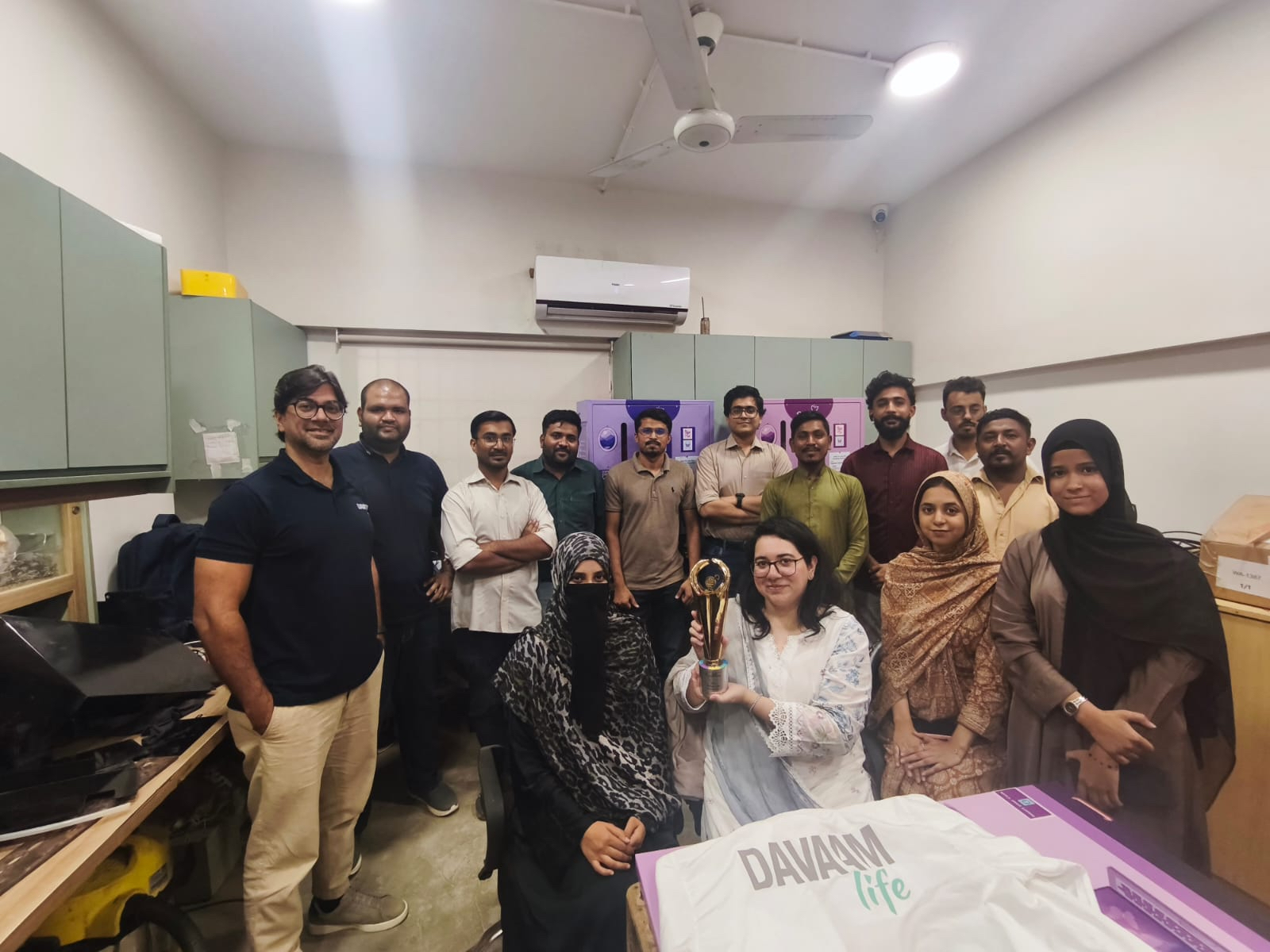
When menstrual products are unavailable in school or workplace washrooms, women and girls may need to leave the premises or ask someone else for help, compromising their privacy. Davaam Life worked with students, HR staff and facility managers to address this gap. The case shows how a company can respond to a gender- related need by designing for privacy, adapting payment and funding models to local conditions, and working with people inside institutions to secure adoption. As more institutions adopted the solution, Davaam Life expanded its corporate client base and secured partner funding for new installations, helping it grow the business while extending access.
Sustainability-Tech
Industry
2017
Founded
Pakistan
Headquarters
23
Global workforce
2. The Challenge
Closing gaps in dignified access to menstrual products
Women and girls in workplaces, schools and other facilities in Pakistan can face situations where menstrual products are not readily available when needed. In these circumstances, they may have to ask colleagues or peers for help, affecting privacy and dignity; Davaam Life also identified lack of access as a factor that can contribute to school absenteeism.
Davaam Life saw an opportunity to address this gap by integrating menstrual product access into the facilities women and girls already use. The challenge was not only to make products physically available, but to develop a solution that could work across different institutional and socioeconomic settings while remaining operationally and financially sustainable. This became closely aligned with the company’s core business model of developing localized vending solutions that help make facilities more inclusive.
3. The Action
Building an inclusive model for menstrual product access
DESIGNING ACCESS AROUND PRIVACY AND DIGNITY
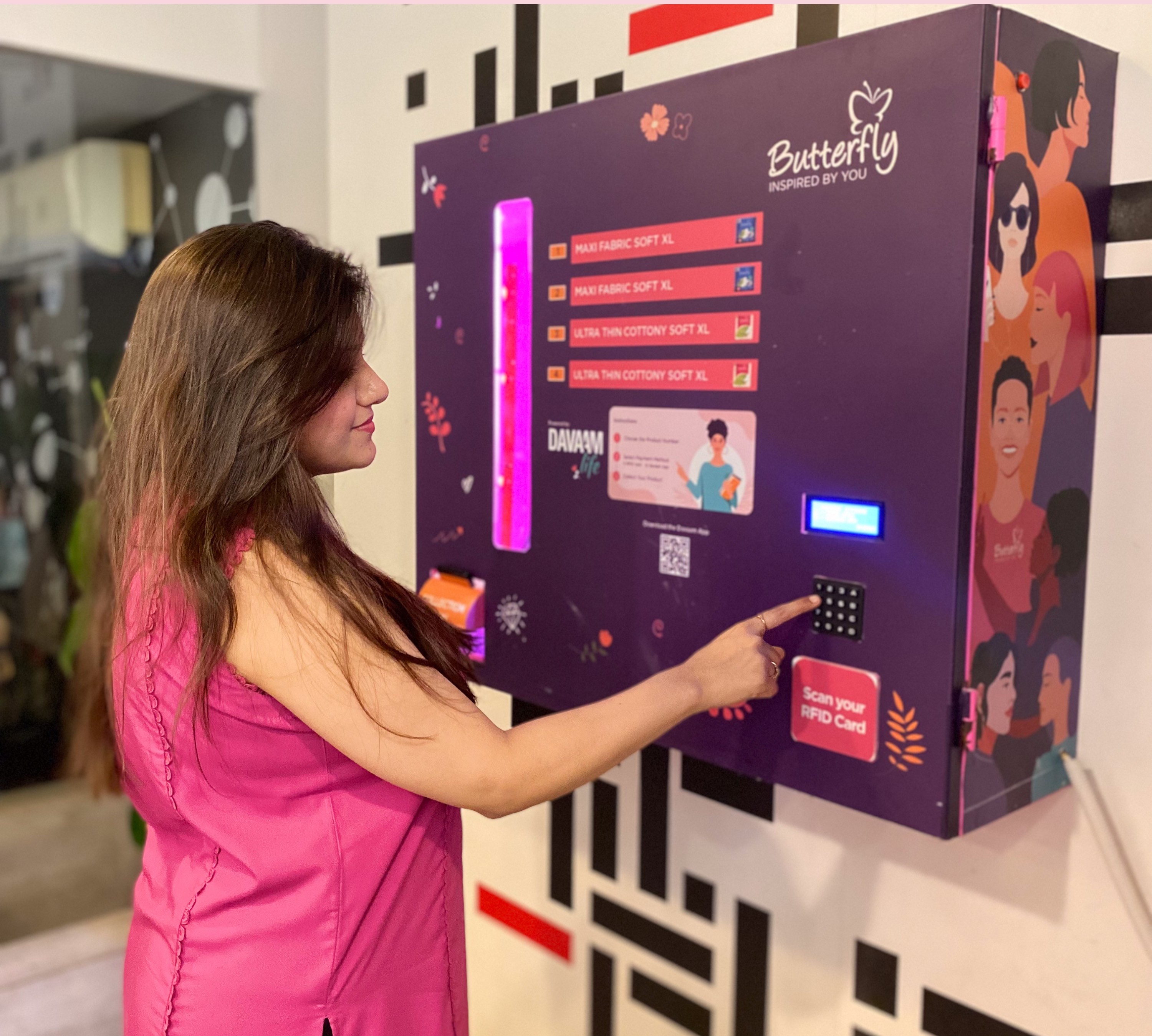
Davaam Life designed a compact vending machine specifically to fit inside female washrooms, allowing women and girls to obtain menstrual products without leaving the space or having to ask colleagues, teachers or other people for assistance.
The company subsequently adjusted the machine’s size, storage capacity and dispensing mechanisms based on operating experience. Reliability was particularly important: the solution needed to work consistently at the point when menstrual products were required.
CREATING DIFFERENT AFFORDABILITY MODELS FOR DIFFERENT USERS
Davaam Life developed different access and payment models rather than applying the same approach across all facilities. Corporate clients can provide menstrual products to employees free of charge, with employees accessing their allocation through their identification cards.
In settings where institutions could not fully fund the products, Davaam Life also tested subsidized access. At one low-cost charitable school serving girls from low-income and conservative backgrounds, menstrual products were subsidized rather than provided for free. The machine subsequently became the third most-used across Davaam Life’s network of more than 150 machines at the time reported.
SIMPLIFYING TECHNOLOGY TO AVOID CREATING NEW ACCESS BARRIERS
Davaam Life initially designed more technologically sophisticated machines, including digital-only payment mechanisms. Implementation showed that internet connectivity and limited familiarity with app- based payments could make this approach impractical for some users in Pakistan.
The company therefore simplified the technology and adapted payment and dispensing mechanisms to local conditions. This shifted the design focus from technological sophistication to reliable access for the intended users.
BRINGING WOMEN AND GIRLS INTO INSTITUTIONAL DECISION-MAKING
Adoption depended not only on installing equipment but also on getting institutions to recognize menstrual product access as a facility need. Davaam Life found that some administrators, often men, did not immediately recognize the problem, while women working in HR functions often understood it from their own experience.
The company worked with these internal champions to build organizational support and navigate approval processes. In educational institutions, students often approached Davaam directly. The company explained the installation process, after which students advocated internally with their own administrations and management teams for the solution.
BUILDING PARTNERSHIPS TO MAKE ACCESS SCALABLE AND FINANCIALLY SUSTAINABLE
Davaam Life partnered with a major feminine hygiene company in Pakistan to provide menstrual products through the machines. Working with an established supplier helped ensure access to a recognized product.
The partnership subsequently evolved from CSR support to direct financing of machine installations by the feminine hygiene company. This created another mechanism for extending access while supporting the financial sustainability of Davaam Life’s model. The company also received World Bank support through the PLEASE grant and participated in projects with the World Bank and other donor organizations.
4. Overcoming Barriers
Low recognition of the need
Davaam Life relied on female HR leaders and other internal champions to build support where administrators did not initially see menstrual product access as necessary.
Technology not suited to local conditions
The company simplified early digital-only machines after finding that connectivity and app familiarity limited usability in some settings.
Risk of losing user trust
Davaam Life continuously adjusted machine size and dispensing reliability to ensure the solution worked consistently in washroom environments.
5. Impacts & Results
160+ locations across 9 cities in Pakistan have adopted Davaam Life’s menstrual product vending solution. The company’s network grew 2.5-fold over the five quarters preceding October 2026.
An estimated 300,000+ women and girls have access to the solution across installed facilities. Davaam Life estimates reach using the female population of institutions such as schools and the estimated footfall of locations such as shopping malls.
20+ machines have been installed following student initiatives and participation, with students approaching Davaam Life and advocating for installation within their own institutions.
Corporate clients doubled over the 18 months preceding October 2026, showing growing institutional adoption of the model.
Davaam Life raised equity investment within the two years preceding October 2026. Its feminine hygiene partner also expanded its involvement from CSR-based support to funding machine installations.
6. Key Lessons Learned
Design for the user’s actual operating environment, not the most sophisticated technical solution
Davaam Life’s early reliance on digital payments added complexity that did not match connectivity and user behavior in parts of Pakistan. Simplifying the machine ultimately made the solution more appropriate to the context.
Internal demand can help overcome resistance from formal decision-makers
Facility managers did not always recognize menstrual product access as an operational need. Employees, students and female HR leaders who understood the problem helped establish internal demand and build support for adoption.
Reliability matters when introducing an unfamiliar service
For a new solution to become part of everyday facility infrastructure, users need to trust that it will work when required. Davaam Life therefore treated machine size, dispensing reliability and continuous product improvement as central to adoption rather than as secondary technical issues.

"Solve an everyday problem for your people, and it will automatically create its sustainability path: financial sustainability as well as programmatic sustainability.”
Salman Tariq, CEO Davaam Life
7. Company Commitment
Davaam Life has been a committed participant of the UN Global Compact from 2022
8. Recommended Resources
Recommended UN Global Compact Resources



Download Case Study
Disclaimer: This case example is intended strictly for learning purposes and does not constitute an endorsement of the individual companies by the UN Global Compact.