
Contactar Bank: Relational Banking Unlocks $39.2 bn in Indigenous Credit
Start Reading

1. Company at a Glance
This case study explores how Banco Contactar S.A., a Colombian financial institution, developed the initiative “Mi Tierra, Finanzas con Sentido Étnico” (“My Homeland, Finances with an Ethnic Focus”) to reduce inequalities and promote inclusive development. By bringing financial education and tailored solutions to indigenous communities, Banco Contactar demonstrates how a relational banking model can drive social impact, strengthen cultural identity and foster economic autonomy. The financial education delivered through the Mi Tierra program focuses on personal finance adapted to the specific needs and realities of these communities.
Banking and Finance
Industry
1991
Founded
Colombia
Headquarters
1500
Number of Employees
2. The Challenge
Colombia’s indigenous communities continue to face long-standing barriers such as geographic isolation, cultural and linguistic differences and historical exclusion from both social and financial systems. These conditions make it particularly difficult for them to access financial services and educational opportunities tailored to their needs and identities.
Banco Contactar understood that achieving true financial inclusion requires more than simply offering credit—it demands trust-building, cultural sensitivity and active collaboration. Through the “Mi Tierra, Finanzas con sentido étnico” program, Banco Contractar integrated community-based credit advisors into a relational model, enabling financial inclusion for members of indigenous communities.
3. The Action
Participatory Co-Creation with Communities
The process began by applying geographic criteria to identify areas with the highest concentration of clients from indigenous communities. Once the first three key areas were mapped, the focus shifted to collaboration. Joint working groups were formed, bringing together bank representatives and community leaders to design the program’s foundations collectively.
Working group sessions focused on deepening cultural understanding, recognizing local customs and identifying productive needs—ensuring that the resulting approach was inclusive, respectful and fully informed by community perspectives.
Development of Tailored Financial Education
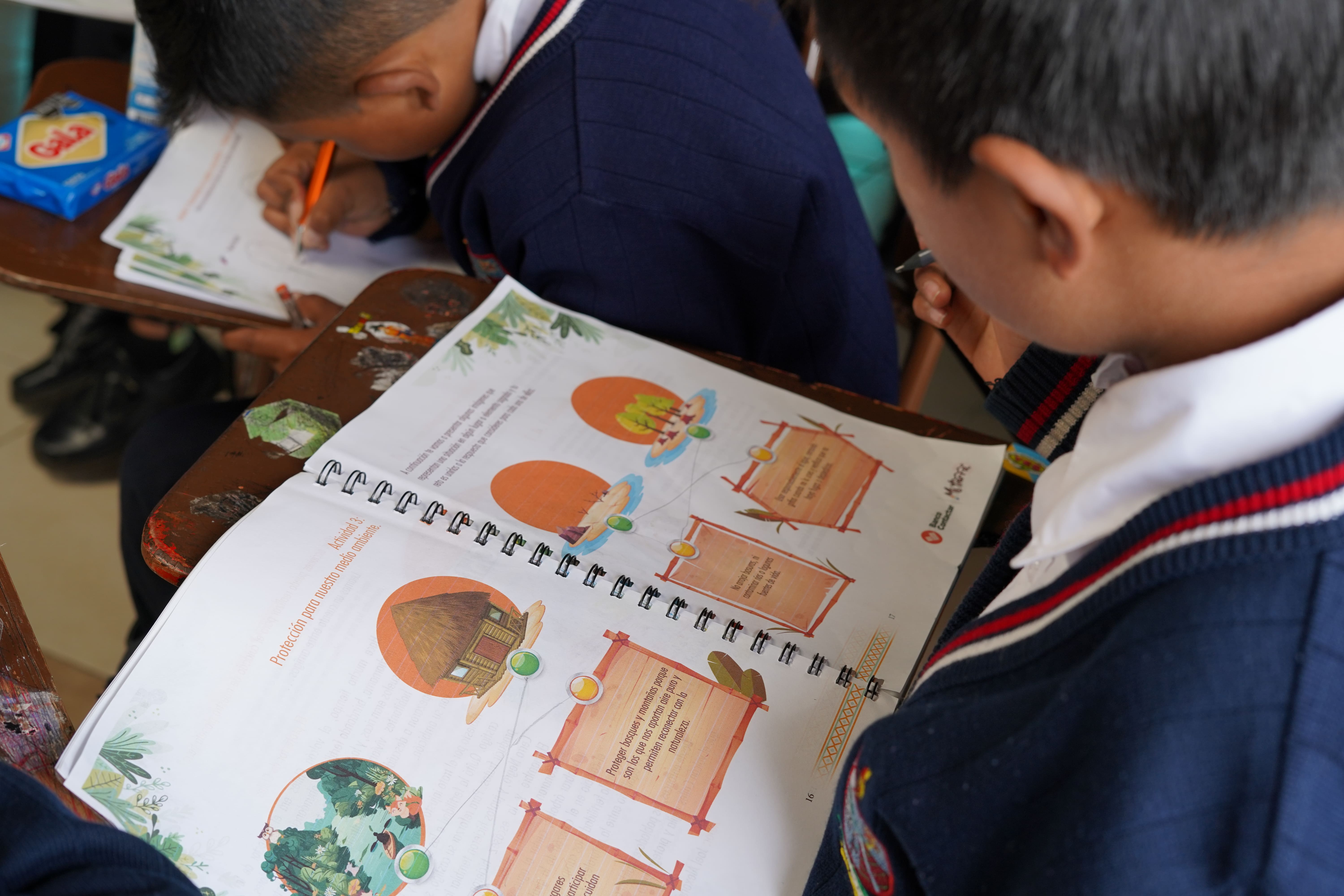
The programme included a financial education component designed specifically for indigenous communities, integrating behavioural economics to strengthen learning and adoption. The content was adapted to each community’s language, social norms and ancestral knowledge, with a curriculum focused on personal finance: budgeting and tracking income and expenses, saving, responsible consumption, understanding and managing financial products and services, and basic investment strategies linked to entrepreneurship.
A distinctive feature was the early linkage between environmental stewardship—a core value in indigenous worldviews—and the habit of saving. For children, this connection laid the foundations of resource preservation; for youth and adults, it emphasized saving to achieve personal goals and cope with unexpected events. Follow-up assessments showed strong interest in all topics, with particular enthusiasm for responsible consumption, investment and product management. Saving remains a significant challenge, which is precisely why families value this component as a key tool for the well-being of their children and future generations.
Training of Local Facilitators
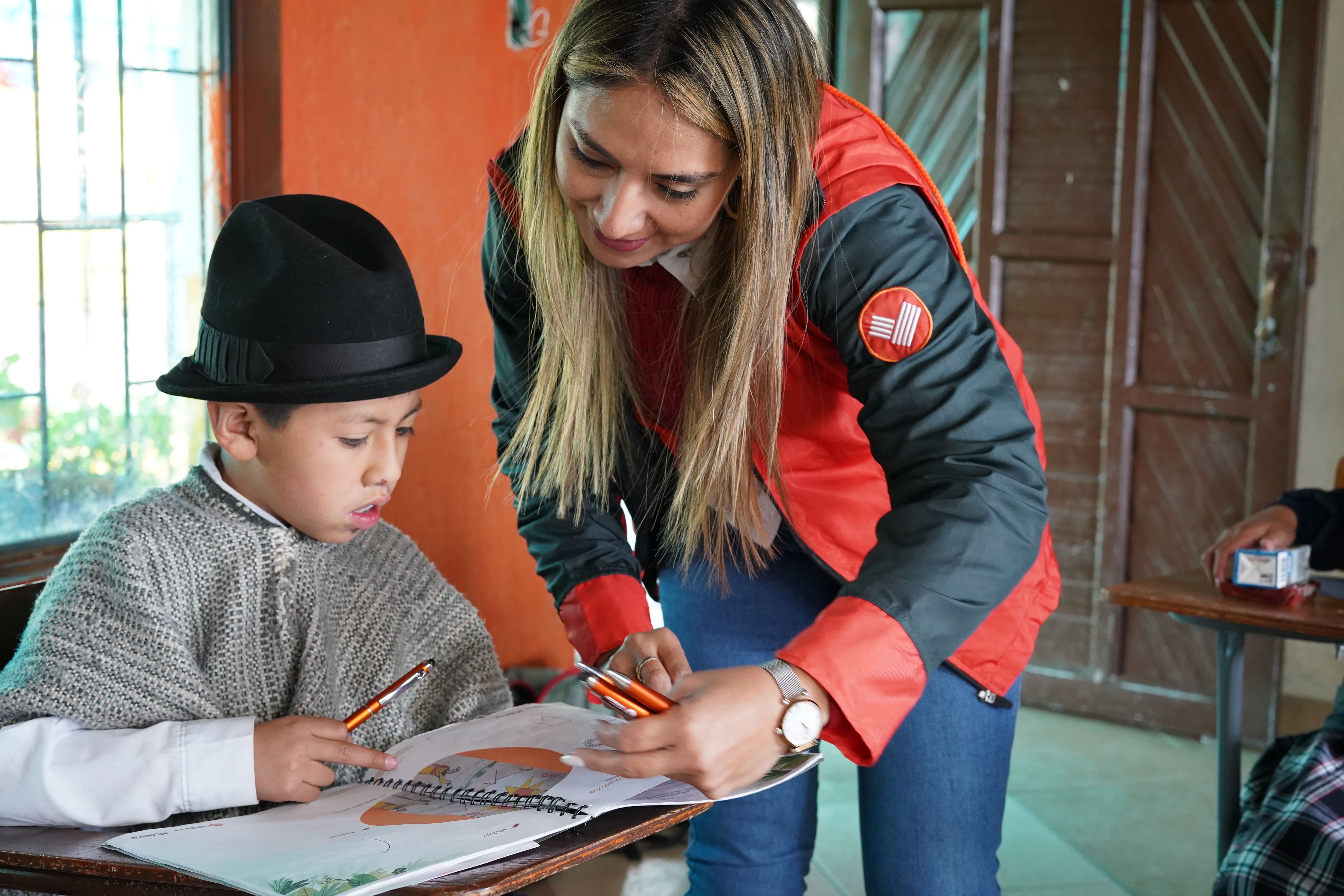
Banco Contactar strengthened the program’s sustainability and cultural relevance by investing in local capacity building. Teachers and community leaders were identified and trained as facilitators within indigenous territories. These individuals were selected based on skills, academic background and teaching experience.
Appointed directly by their communities, facilitators played a crucial role in adapting the program to their local contexts. They participated in early-stage co-creation workshops to tailor training materials by translating content into native languages, using culturally representative colors and aligning activities with local festivities. This ensured that the program was both relevant and respectful of each community’s traditions and customs.
Although the core objective of “Mi Tierra” is economic and financial education, several communities expressed a parallel interest in using the sessions to strengthen their ancestral languages. In those specific cases, being a native speaker became an important selection criterion for facilitators so that they could simultaneously act as cultural and linguistic transmitters. The use of indigenous languages was thus incorporated in response to community demand and helped reinforce identity, while never displacing the program’s primary focus on personal finance and financial inclusion.
The training model was built to empower facilitators not only with content knowledge but also with practical teaching skills, enabling them to deliver sessions effectively and replicate the program autonomously. While the Bank did not provide financial compensation, facilitator involvement was recognized as a community contribution to the initiative.
Creation of Bilingual Educational Materials
Two educational booklets were co-developed and translated into three indigenous languages: Runa Shimi (Yanacona community, Huila), Pijao (southern Tolima) and Pastos (Gran Cumbal, Nariño). The last two are classified as endangered languages. These materials were both pedagogical and practical, ensuring accessibility for participants across different age groups and literacy levels.
Leveraging Technology to Expand Reach
To enhance access, Banco Contactar integrated the program into its digital tools, particularly the bank’s ChatBot. This channel was updated to provide financial education content in a way that was respectful and responsive to the unique needs of indigenous users.
“We consider financial management essential so that our community members value saving and learn to manage their finances well. We’ve received training in finance, environmental issues, and indigenous education... We want young people not to leave our areas, which offer many opportunities; and by working it with technical practices, with the support of financial institutions, we can manage it better.”
Jorge Franklin Pantoja Martínez, Principal, La Calera Educational Institution
4. Overcoming Barriers
Cultural and linguistic differences
The bank implemented participatory methodologies and co-created educational content with community members. Two educational booklets were developed and translated into ancestral languages to ensure accessibility and cultural relevance.
Distrust toward financial institutions
A relational banking model rooted in respect, consistency and trust-building, with frequent in-person visits and respectful dialogue helped establish strong, trust- based relationships.
Geographical barriers and rural dispersion
The bank prioritized reaching dispersed communities—“to the top of the mountain”—and maintained remote communication through technology, including through an evolving ChatBot which provides financial education content in a respectful and tailored manner.
5. Impacts & Results
A total of 497 direct beneficiaries from three different indigenous communities—including children, youth and adults—participated in the Mi Tierra program. The initiative not only strengthened their financial and cultural knowledge but also contributed to a positive shift in how they perceive and engage with the formal financial system. Participants received printed educational materials tailored for local implementation, along with digital resources designed to support ongoing replication of the learning model within their communities.
7,466 indigenous individuals accessed credit products from Banco Contactar in 2024, for a total value of $39.264 billion COP (10 million dollars), demonstrating enhanced financial inclusion. These loans have special conditions that facilitate access and are supported by complementary training.
Two educational booklets were co-created and translated into ancestral languages, serving as culturally relevant tools for financial education.
Teachers and community leaders were trained as local facilitators, strengthening internal capacity and ownership within the communities.
Financial education content was adapted using behavioural economics and made accessible both digitally and physically, ensuring broader reach.
Trust in the financial systemincreased, as reported by community feedback, with participants viewing Banco Contactar as a true ally in their personal and economic development.
6. Key Lessons Learned
Designing inclusive initiatives requires identifying specific community needs, barriers and cultural contexts.
Relational banking, based on proximity and assertive communication, is essential to building trust and long-term engagement.
Strengthening communication and visibility strategies is key to expanding impact and reaching more underserved populations.
“More than offering products, we have promoted the autonomy and economic well-being of indigenous communities, honouring and recovering their ancestral knowledge.”
Carolina Orrego Arboleda, Director of Communications and Social Inclusion, Banco Contactar
7. Recommended Resources
Recommended UN Global Compact resources available to support your journey:


Download Case Study
Disclaimer: This case example is intended strictly for learning purposes and does not constitute an endorsement of the individual companies by the UN Global Compact.