
SDG Business Forum calls for business to move from strategy to delivering on the Global Goals
Read more
United States of America
UNITED NATIONS, New York, 25 September 2019 — Organized today on the sidelines of the inaugural SDG Summit, the fourth annual SDG Business Forum convened business, Government, civil society and the United Nations to discuss concrete solutions to move from commitments to action to deliver on the Global Goals.
Co-hosted by the International Chamber of Commerce (ICC), the United Nations Department of Economic and Social Affairs (UN DESA), and the United Nations Global Compact, the Forum — now in its fourth year — gathered nearly 600 stakeholders to dive deep into sustainable financing, the future of business and scaling ambition for a sustainable world.
In her keynote address, H.E. Amina J. Mohammed, Deputy Secretary-General of the United Nations, said: “The Global Goals have been gaining traction around the world, reflecting their universal nature. However, the bottom line is that we are still not on track. And the urgency of achieving the goals — of which ambitious climate action is a part — demands that we pick up the pace.”
“There is still time for us to get on track. And there is a very solid base for this optimism, including a committed global movement — including many of you in this room — ready to move to another level,” she added.
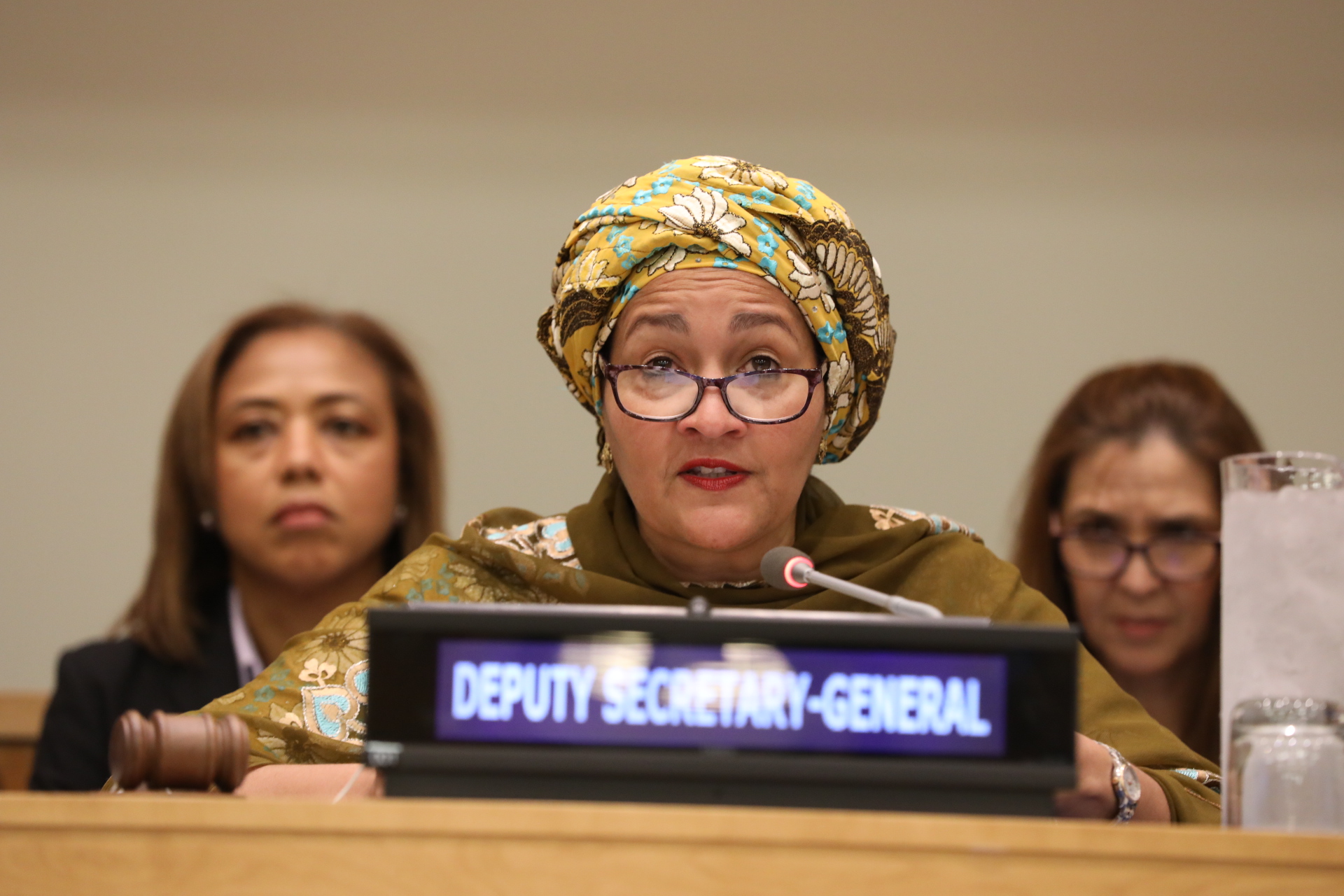
H.E. Amina J. Mohammed, Deputy Secretary-General of the United Nations, said that there is still time to get the world back on track to delivering the Global Goals.
Liu Zhenmin, United Nations Under Secretary-General for Economic and Social Affairs, echoed the Deputy Secretary-General’s call for urgent action, encouraging all stakeholders to consider ways in which they can step up efforts for a better future for all. “It is encouraging to see how the buy-in across Governments and stakeholders — including from business and industry for this universal agenda — remains strong. Yet, recent reports show that we are still far from achieving the SDGs at the global level, by their target year.”
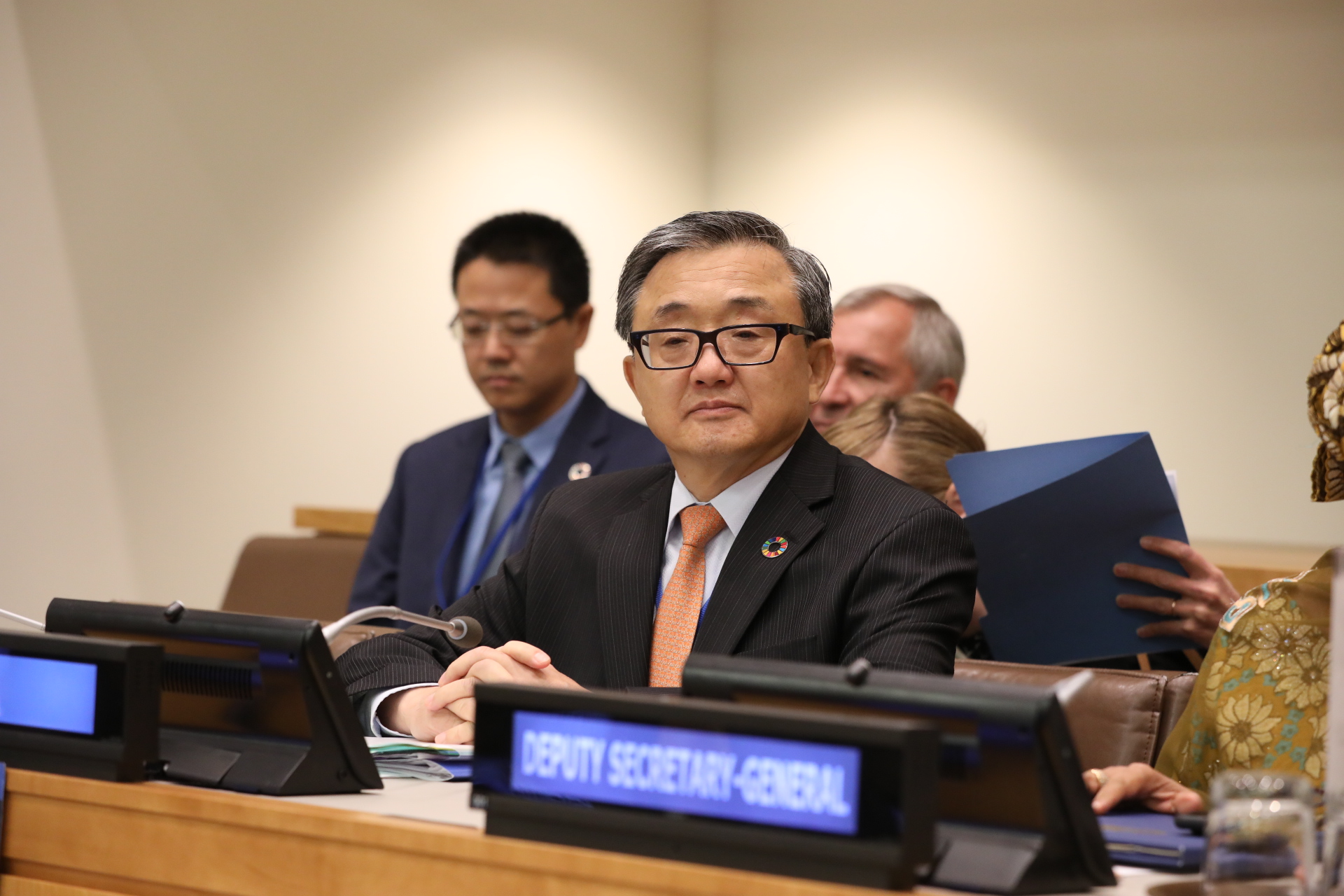
Liu Zhenmin, United Nations Under Secretary-General for Economic and Social Affairs, encouraged all stakeholders to consider ways in which they can step up efforts for a better future for all.
Lise Kingo, CEO and Executive Director of the UN Global Compact, shared results from the recently published UN Global Compact Progress Report 2019: 90% of UN Global Compact participants responding to a survey reported to have policies and practices in place for each of the Ten Principles of the UN Global Compact. Out of the respondents, 81% reported to be taking action on the Global Goals.
Ms. Kingo emphasized that it is critical for these ambitions to be matched with action. “Despite the fact that many businesses have sustainability strategies, policies and codes of conduct in place, it is no guarantee for measurable impact. Being an impactful sustainable business means fully integrating sustainability into core business strategy, operations, supply chain management and stakeholder engagement.”
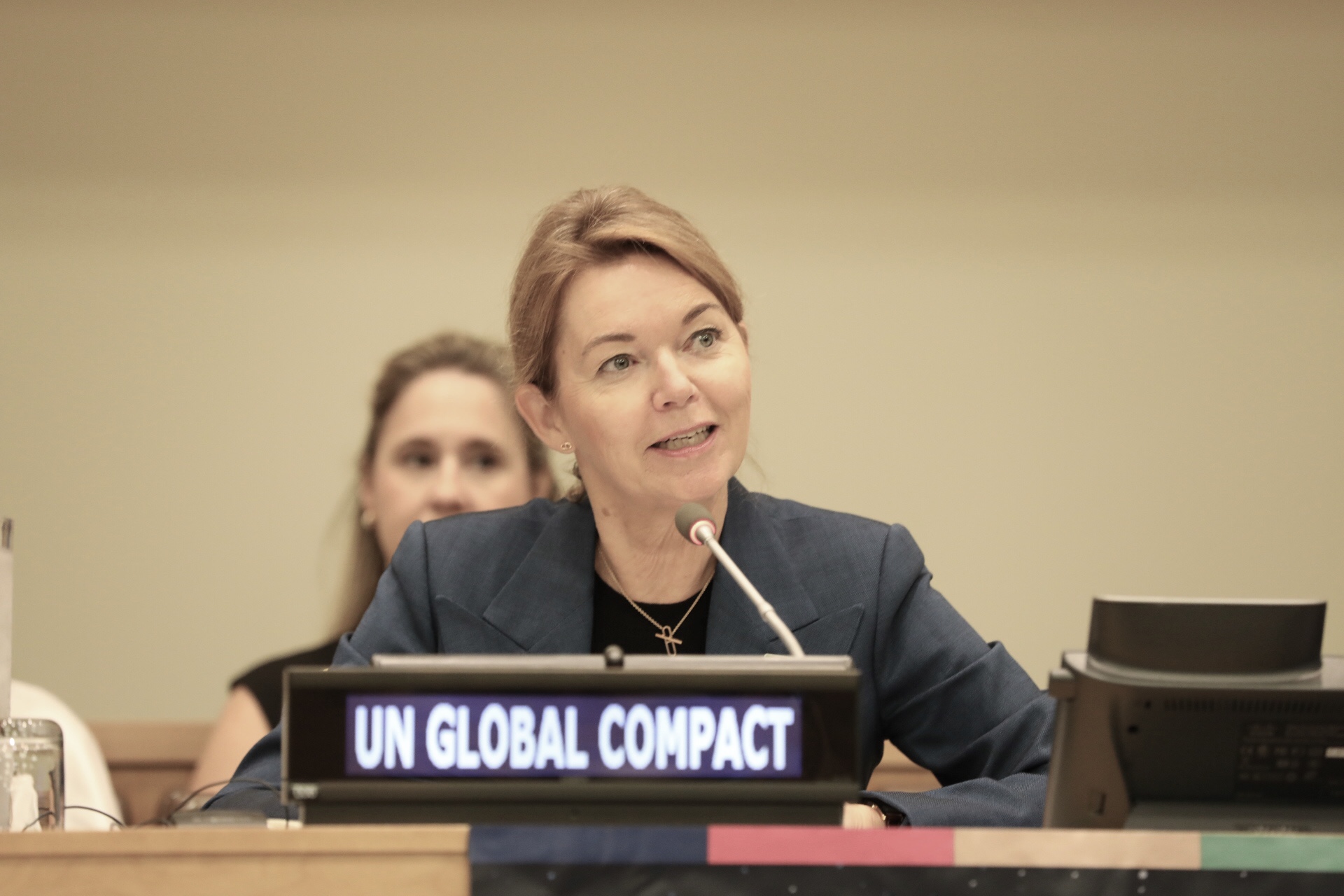
Lise Kingo, CEO and Executive Director of the UN Global Compact, emphasized that being an impactful sustainable business means fully integrating sustainability into core business strategy.
The panel discussions during the SDG Business Forum focused on ways for companies to tangibly integrate the SDGs into their financing, operational processes and internal decision-making. Panelists also shared views on the changing landscape of business as it contends with global changes.
John Denton, Secretary-General of the International Chamber of Commerce, highlighted the importance of aligning private financing with the Global Goals. “We need a real, honest and no-holds barred discussion on properly aligning financial systems with the imperative of sustainable development. Despite some promising signs, sustainable finance remains a market exception at a moment in history when people and our planet require it to be the norm.”
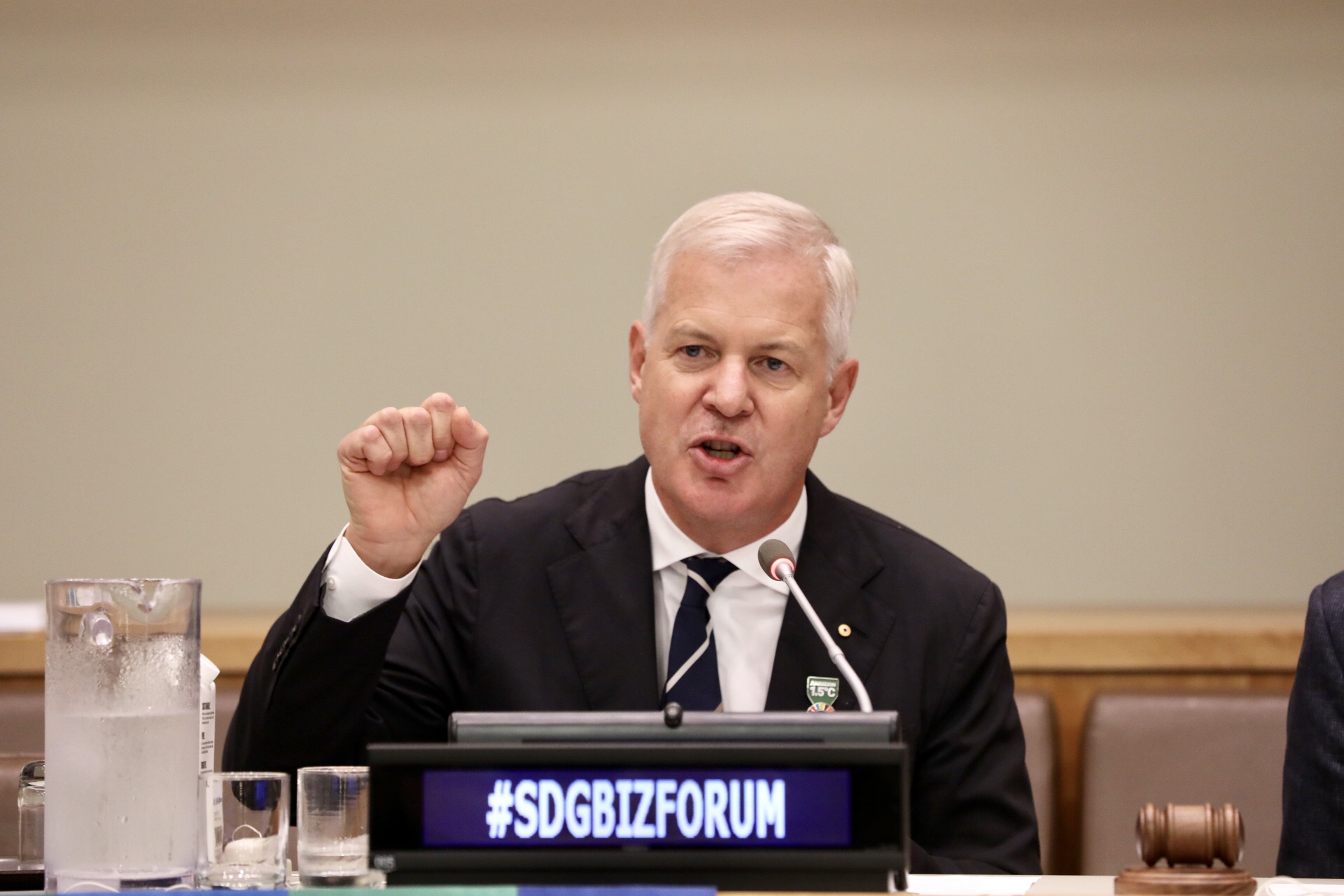
John Denton, Secretary-General of the International Chamber of Commerce, called for the alignment of private financing with the Global Goals.
In his closing remarks, Paul Polman, SDG Advocate and Co-founder of Imagine, referred to the financing gap of US$ 2 to 3 trillion to make the SDGs a reality by 2030. “This is probably the biggest business opportunity that we have seen in the history of mankind.” He reminded the audience that the world is arriving to a point in time, where the cost of not taking action is becoming higher than the cost of action.
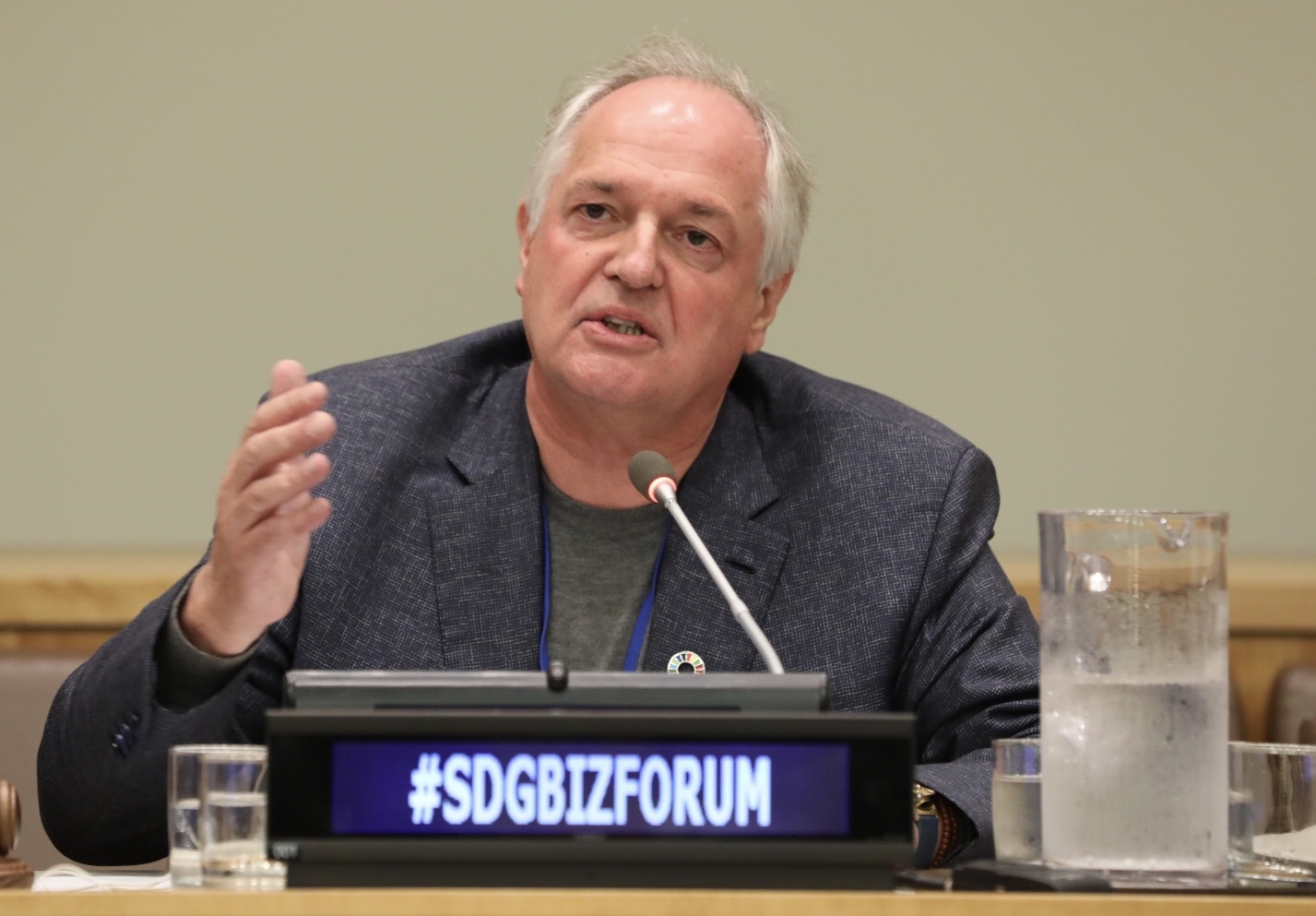
Paul Polman, SDG Advocate and Co-founder of Imagine, emphasized that the Global Goals provide a significant opportunity for responsible business.
The SDG Business Forum was supported by the Kingdom of Denmark, the Republic of Finland, the French Republic, the Federal Republic of Germany and the Italian Republic along with the Prince's Responsible Business Network, the International Organisation of Employers and the World Business Council for Sustainable Development. It took place on the sidelines of the 74th session of the UN General Assembly.
About the United Nations Global Compact
As a special initiative of the UN Secretary-General, the United Nations Global Compact works with companies everywhere to align their operations and strategies with ten universal principles in the areas of human rights, labour, environment and anti-corruption. Launched in 2000, the UN Global Compact guides and supports the global business community in advancing UN goals and values through responsible corporate practices. With more than 9,500 companies and 3,000 non-business signatories based in over 160 countries, and more than 60 Local Networks, it is the largest corporate sustainability initiative in the world.
For more information, follow @globalcompact on social media and visit our website at www.unglobalcompact.org.
Contact
UN Global Compact
Leila Puutio
Manager, Communications
Tel: +1 212-884-7523
Email: media@unglobalcompact.org