
Global Compact Network Japan Launches “Tokyo Principles for Strengthening Anti-Corruption Initiatives” and an Assessment Tool
Read more
Tokyo, Japan
The following is an article submitted by a Global Compact Local Network. Please contact the network representative listed below with any questions regarding its contents.
(Tokyo, 5 March 2018) — On 5 March, Global Compact Network Japan (GCNJ) launched the “Tokyo Principles for Strengthening Anti-Corruption Initiatives” and “Anti-Bribery Assessment Tool.” Both were developed through the local implementation of the Siemens Integrity Initiative (SII) Anti-Corruption Collective Action project, managed by the UN Global Compact together with the Basel Institute on Governance. These launches were the offshoot of a symposium held on 27 February in Tokyo to promote the Tokyo Principles to Japanese companies. Attended by 70 participants, the symposium was supported by the UN Global Compact, Principles for Responsible Investment (PRI) and Anti-Bribery Committee Japan.
The Tokyo Principles will allow Japanese companies (operating domestically and internationally) to strengthen their commitment to the Tenth Principle of the UN Global Compact, which states: businesses should work against corruption in all its forms, including extortion and bribery. Furthermore, as part of efforts to increase social and corporate sustainability and transparency, participating companies will aim to implement basic principles for strengthening anti-corruption initiatives. The Anti-Bribery Assessment Tool has been developed to support companies in assessing and proactively disclosing their current status on anti-corruption measures, thereby creating a starting point for constructive engagement and dialogues with stakeholders including investors.
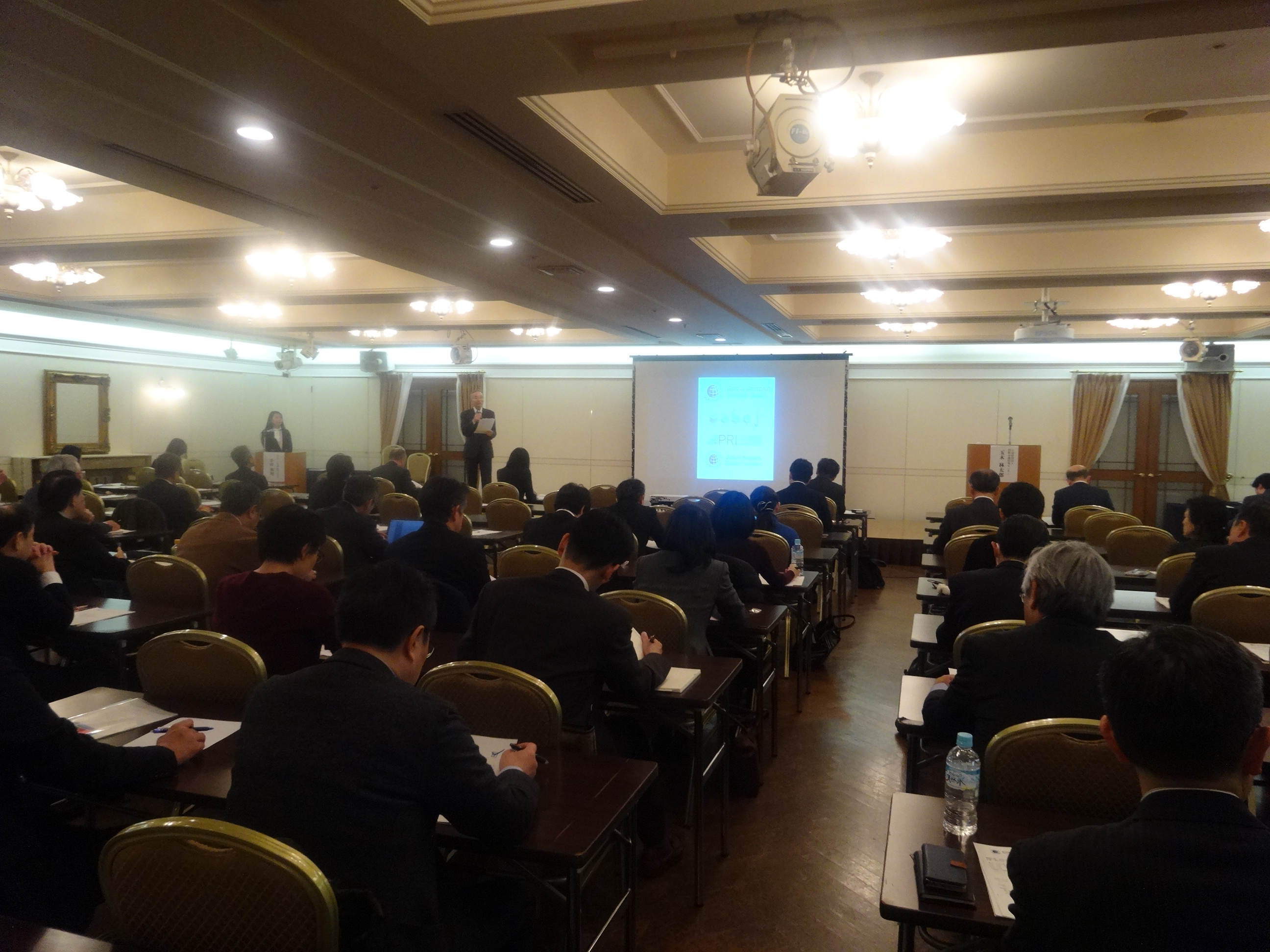
During the symposium, Mr. Rintaro Tamaki, President of Japan Center for International Finance (JCIF) and former Deputy Secretary-General of OECD, gave a keynote speech and explained the background and purpose of “OECD Convention on Combating Bribery of Foreign Public Officials in International Business Transactions” and its implementation in Japan. Mr. Tamaki also stressed the important role the top management has to play in compliance with anti-corruption rules.
Later in the programme, a panel consisting of representatives from business, law, Government and finance shared their experiences and views with regards to current bribery and corruption risks that Japanese companies and other stakeholders face. The session also helped raise awareness among the participants on critical anti-corruption issues and covered best practices on crisis management, corporate information disclosure and effective implementation of internal control systems.
Finally, GCNJ shared a blueprint of the way forward regarding ways to promote the Tokyo Principles. GCNJ hopes that as more companies commit to the Tokyo Principles, they can transform the world through anti-corruption collective action.
###
- Read the “Tokyo Principles for Strengthening Anti-Corruption Initiatives” (English)
- View the “Anti-Bribery Assessment Tool” Introduction, Attachment and Tool (English)
- Visit the Anti-Corruption Collective Action on GCNJ’s website (Japanese)
Contact details:
Name: Global Compact Network Japan Secretariat
Phone: +81-3-5412-7235
Email: ACCAinitiative@ungcjn.net
Local Network website: http://www.ungcjn.org/index.html
About Global Compact Network Japan
The Global Compact Network Japan (GCNJ) started in 2003 within the United Nations Information Centre (UNIC) with the participation of 11 companies. To implement activities led by member companies, the GCNJ became independent of the UNIC in 2008. Then in 2011, the GCNJ became a general incorporated association to strengthen its organizational governance. During this process, more companies steadily joined the GCNJ as members. As of February 2018, the number of participating companies and organizations is 264. The GCNJ’s mission is to realize a sustainable world by providing a platform for learning, collaboration, and communication to member companies and organizations aiming to integrate sustainability strategies into corporate management through practices based on the Ten Principles of the UN Global Compact.
About the SII Anti-Corruption Collective Action Project
Through the Siemens Integrity Initiative (SII) second round of funding, the UN Global Compact is partnering with the Basel Institute on Governance and Local Networks (LNs) in Brazil, Japan, Kenya and Nigeria to enhance knowledge and strengthen capacity in Anti-Corruption (AC) Collective Action (CA) initiatives at the local level. As part of the project, a number of multi-stakeholder dialogues have been held, creating a platform for identifying and aligning various stakeholders and mutual interests around particular challenges related to anti-corruption.