
Executive Update: Getting Our Priorities Right
Read more
New York, United States of America
The following is an article by Lise Kingo, CEO & Executive Director, United Nations Global Compact, posted on 29 October 2018.
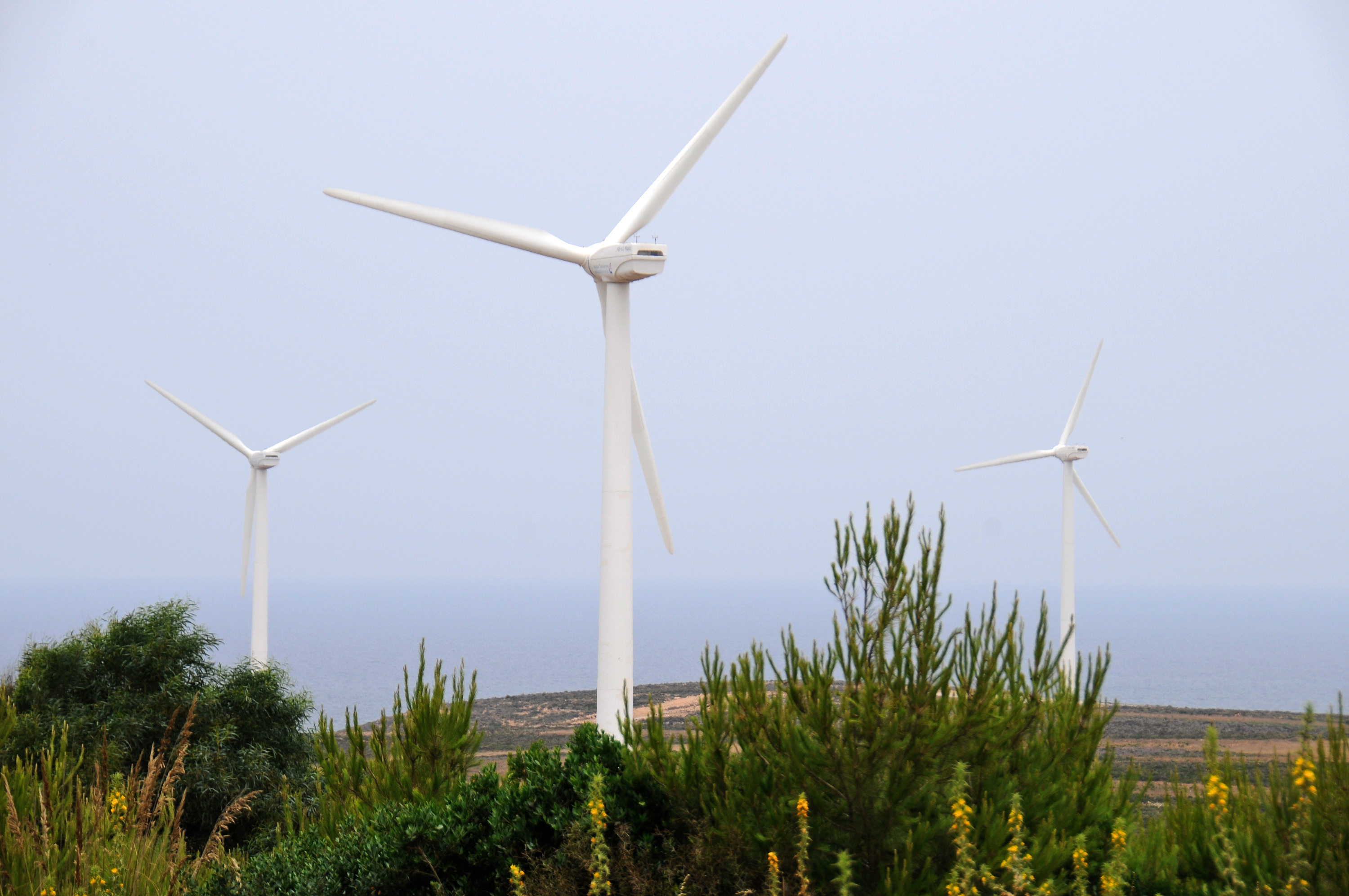
Wind turbine farm, Tunisia. Photo: Dana Smillie / World Bank.
Three years into the 2030 Agenda for Sustainable Development, momentum is building but not at the pace or scale we need. Responsible business leaders are ready to take the Agenda to the next level, and they turn to the UN Global Compact with one resounding question: Where should we prioritize our action for change?
Just last month, hundreds of Heads of State and Government, business CEOs and civil society leaders gathered in New York for the UN General Assembly week. They took part in over 240 total meetings and side events, including our own UN Global Compact Leaders Summit and UN Private Sector Forum, which all shared one focus — the progress we have made three years into the Global Goals, and how best to shift onto a more sustainable path.
Here at the world’s largest corporate sustainability initiative — the United Nations Global Compact — we see this stocktaking exercise as essential to get our priorities right for the achievement of the 2030 Agenda.
There is no doubt that momentum from the global business community is building. As highlighted in the UN Global Compact Progress Report 2018, 80 per cent of companies participating in the UN Global Compact state that they are taking action to deliver on the Global Goals, and 66 per cent of these companies are doing so primarily through upholding the Ten Principles of the UN Global Compact, spanning human rights, labour, environment and anti-corruption.
Despite more and more companies taking responsible business action, and many taking the first steps towards measuring their societal impact, it is becoming increasingly clear that we need to go bigger scale at a much faster pace.
Importantly, we are failing to get ahead of the curve on a multitude of critical, systemic issues in areas as wide-ranging as climate change, the health of the ocean, declining biodiversity and freshwater resources, poverty, migration and political instability. As I noted during the Leaders Summit, if we are unable to effectively address these core issues, we will not be able to lay the foundation for a more prosperous, peaceful and just world for all — and it is clear that the private sector has a significant role to play in each of these areas.
Outdated economic models and business-as-usual have spun us into a Gordian knot. Unravelling the knot will require a transformation that is comprehensive and systemic, at a scale that is global and cross-cutting — with no easy solution in sight.
To the global business community, whether part of the UN Global Compact or not, my best advice is to prioritize action that can deliver the greatest impact on the full 2030 Agenda.
Earlier last month, UN Secretary-General António Guterres made a special appeal to the world, saying “Nothing less than our future and the fate of humankind depends on how we rise to the climate challenge. It affects every aspect of the work of the United Nations [and] is essential for global prosperity, people’s well-being and the security of nations.” It is undoubtedly the defining issue of our time.
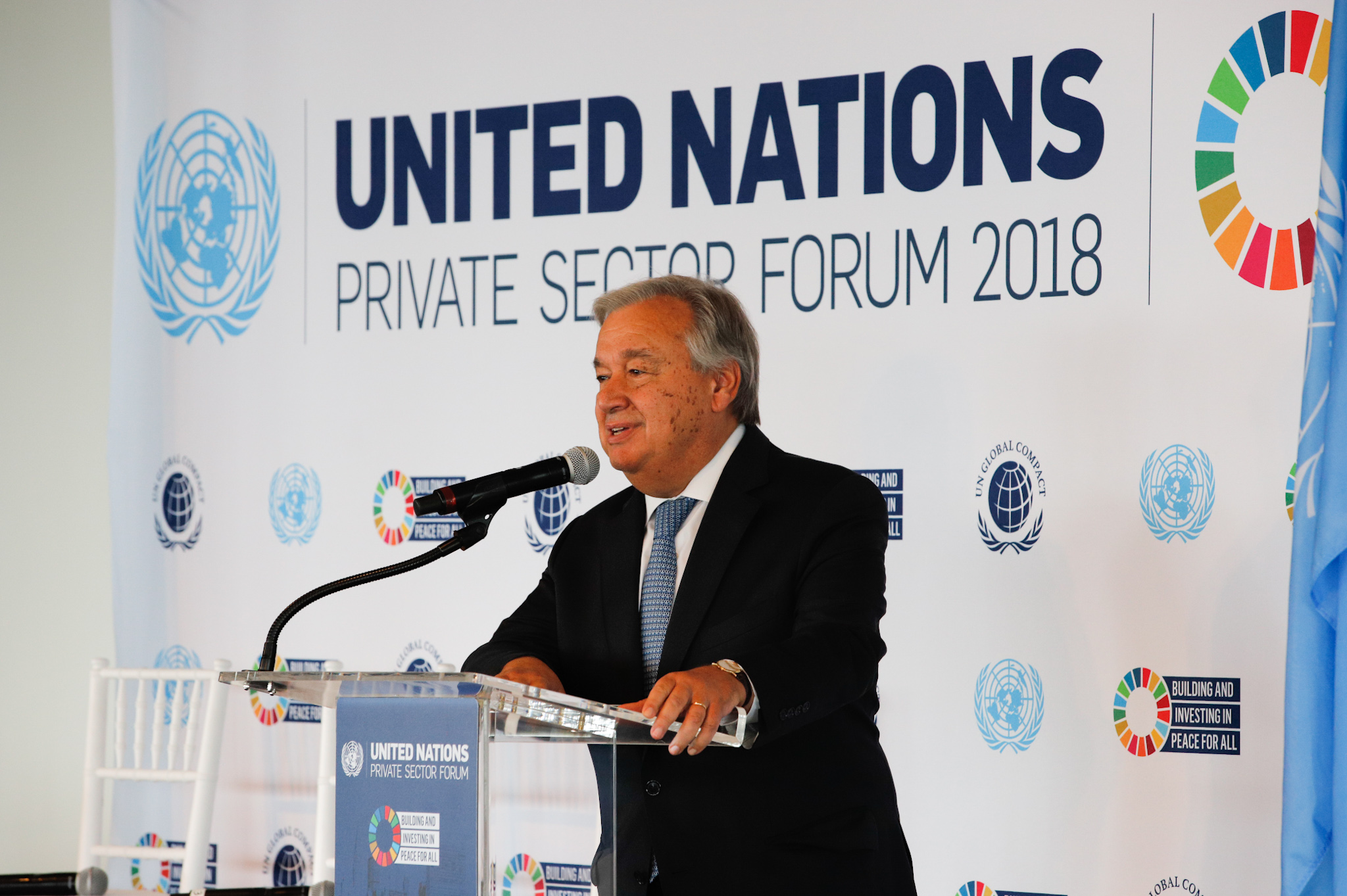
UN Secretary-General António Guterres delivers remarks at the UN Private Sector Forum 2018. Photo: Joel Sheakoski / UN Global Compact.
The Intergovernmental Panel on Climate Change (IPCC) recently released its long-awaited special report on global warming. This report by the world’s leading climate scientists is a wake-up call to the world. The consequences are visible all around us — more extreme weather, rising sea levels, diminishing Arctic sea ice. In the report, scientists paint a vivid picture of the stark difference between a temperature rise of 1.5 degrees versus 2 degrees Celcius. There is no doubt that 0.5 degrees makes a world of difference, resulting in: more heat waves for tens of millions of people, far greater species loss, increased water scarcity in some of the world’s most unstable regions, threats to food security and the increasing exposure of already vulnerable groups including children and young people, women and marginalized communities.
We are confronted with an existential choice: Stay on a deadly course or transition into a more long-term, circular, inclusive low-carbon economy, where people and planet thrive. The cost of inaction will — socially and economically — be far greater than the investments needed to stop runaway climate change.
The good news is that it is still possible to limit warming to 1.5 degrees, but it will take unprecedented changes in all aspects of society — especially in key sectors such as land, the ocean, energy, industry, buildings, transport and cities.
According to “The New Climate Economy” report, transitioning to a low-carbon, sustainable growth path could deliver a direct economic gain of US$ 26 trillion through to 2030 compared to business as usual. The report also highlights that the world is expected to invest about US$ 90 trillion on infrastructure in the period leading up to 2030, noting that if we invest these dollars wisely we can unlock a massive potential gain.
This December, Governments will convene at the UN Climate Change Conference (COP 24) in Katowice, Poland, and in September 2019, the UN Secretary-General will convene a Climate Summit in New York. I am optimistic that these convenings can renew our determination to act, encouraging us to finally break free from the constraints of bureaucratic details and endless negotiations. It is up to us to raise our ambitions yet again aligning with a 1.5 degree Celcius future.
One thing is sure — the global business community is willing and ready to accelerate climate action. To date, more than 2,430 businesses worldwide have made commitments towards the Paris Agreement. 1,300 companies with combined revenues of over US$ 7 trillion are using an internal carbon price, while close to 500 companies with a combined market capitalization of nearly US$ 10 trillion have set science-based targets in line with the Paris Agreement. Another 800 companies have indicated that they plan to make such commitments by 2019.
The human race has time and time again shown our capacity to unite and change our fate, with courage and ingenuity, when danger knocks on our door. This is a time when we must all come together — the private sector, Governments, civil society and young people — to show that we have the collective wisdom and determination needed to realize the ambitions of the Paris Agreement.
In the words of UN Secretary-General António Guterres, “We have the moral and economic incentives to act. What is still missing — still, even after Paris — is the leadership and the sense of urgency and true commitment to [a] decisive multilateral response.”
The time is now for all businesses to step up and join those who are already leading the way.