
Business leaders join Heads of State and UN Secretary-General to discuss peace for all
Read more
New York, United States of America
UNITED NATIONS, New York, 24 September 2018 — More than 120 Chief Executives from some of the world’s leading businesses joined Heads of State and Government and leaders from both the United Nations and civil society today to explore innovative solutions to building and investing in peace for all.
Working together in support of sustainable development and peace was the topic of discussion today at the 10th annual United Nations Private Sector Forum during the 73rd regular session of the UN General Assembly.
Hosted by UN Secretary-General António Guterres, the Forum was part of the broader UN Global Compact Leaders Summit and Nelson Mandela Peace Summit taking place the same day.
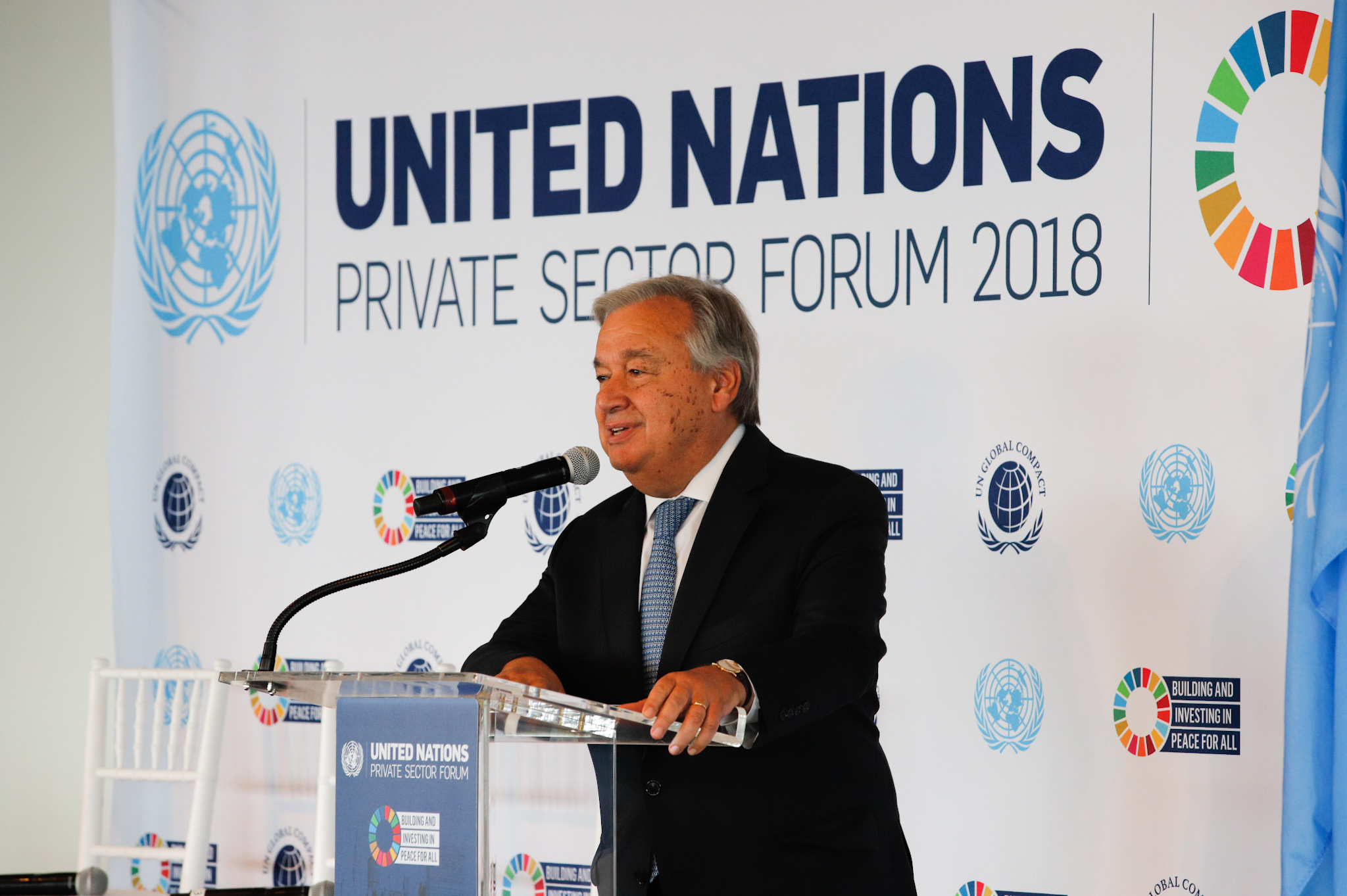
United Nations Secretary-General António Guterres challenged business leaders to commit to building and investing in peace.
In his opening remarks, the Secretary-General emphasized the critical role that business must play in building and maintaining peace, including by upholding the Ten Principles of the UN Global Compact, especially in challenging contexts.
“What matters in the UN Global Compact is that you are committed to values, and those values are exactly what makes your companies not only profitable, effective companies to the economy, but companies that contribute to prevention and sustaining peace which are now central to our concerns at the United Nations,” the Secretary-General said.
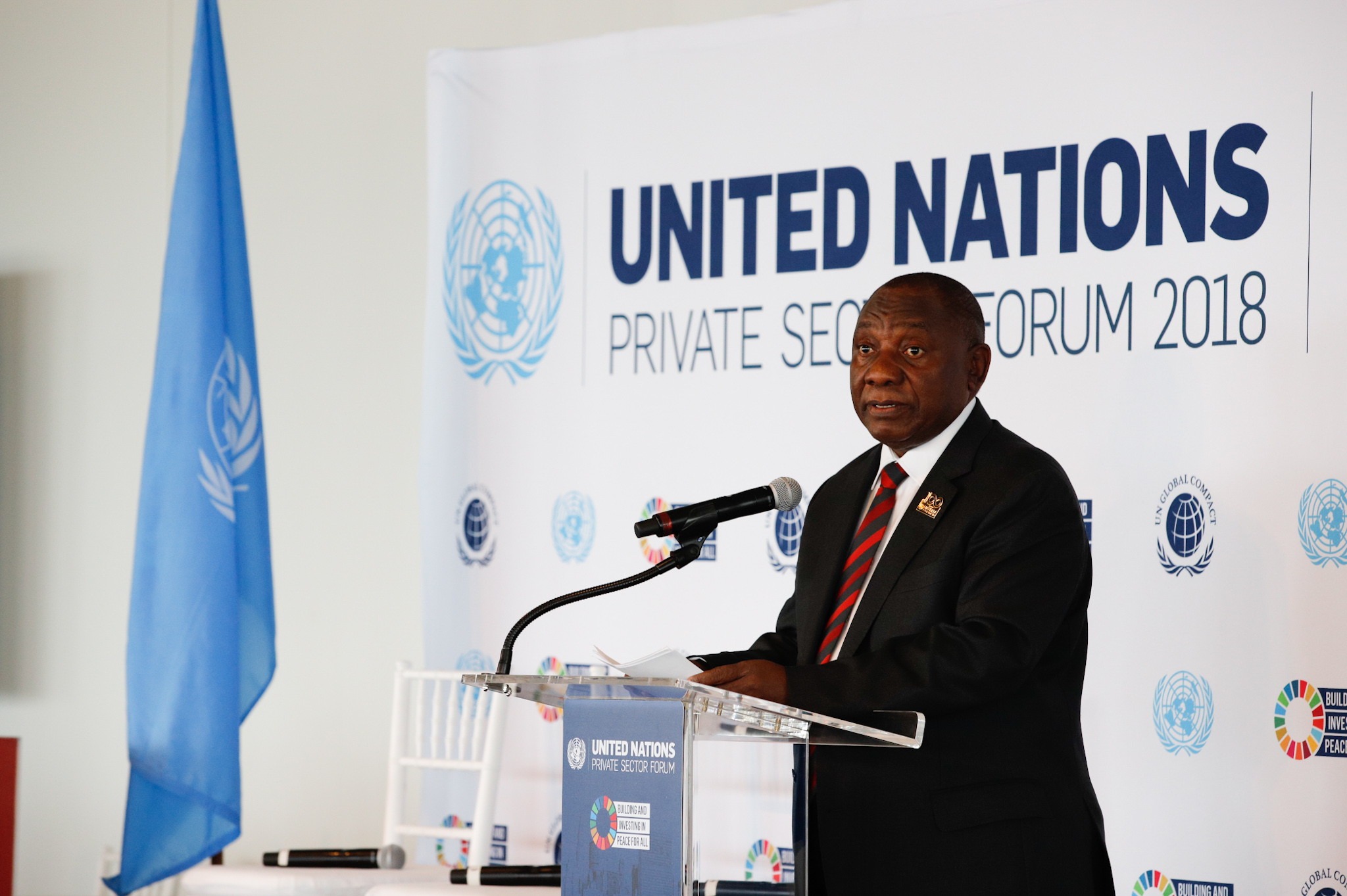 President Cyril Ramaphosa of the Republic of South Africa addressing the UN Private Sector Forum.
In his keynote remarks, President Cyril Ramaphosa of the Republic of South Africa articulated important links between peace and sustainable business, noting: “Peace, stability and the rule of law are critical for economies to thrive, but also for businesses to achieve sustainable returns for their shareholders. The private sector therefore has a direct interest in the preservation of the restoration of peace where peace does not exist.”
Linking these sentiments to Nelson Mandela’s legacy, President Ramaphosa added, “We appreciate the vision of members of the UN Global Compact who have taken it upon themselves to consider their own role — the role of the private sector — in building and investing in peace, for it is an important role the private sector can play in promoting peace around the world.”
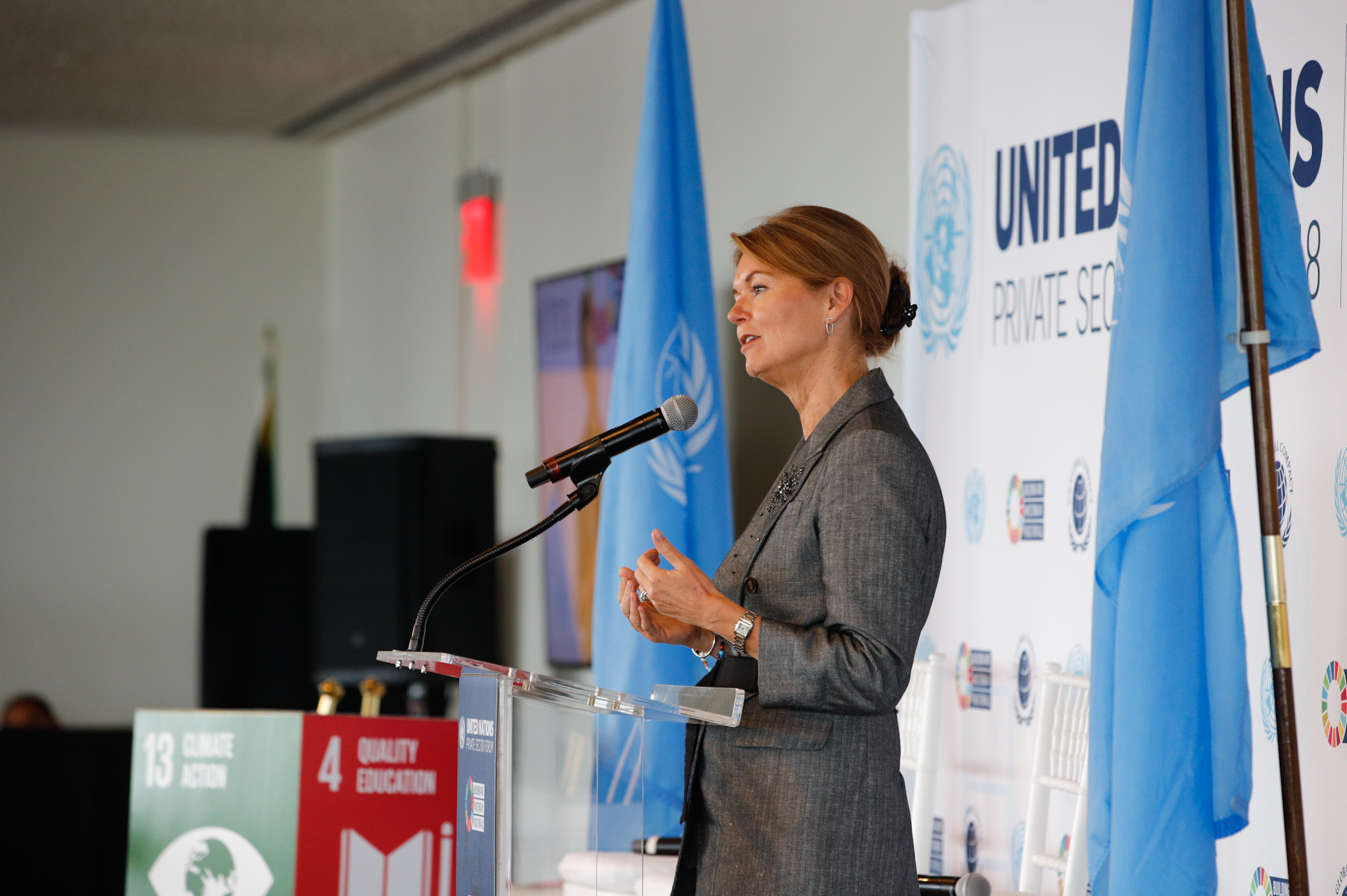
UN Global Compact CEO & Executive Director Lise Kingo welcomed participants to the 10th annual UN Private Sector Forum.
UN Global Compact CEO & Executive Director Lise Kingo also reflected on Nelson Mandela’s legacy saying: “From Nelson Mandela we learned the value of humility, forgiveness and compassion. Where there was conflict, he worked hard to create the conditions for peace, justice and strong institutions. As well as supporting people and their communities, these are the conditions so vital for business to thrive and for sustainable development to succeed. Peace is the foundation for successful and sustainable business.”
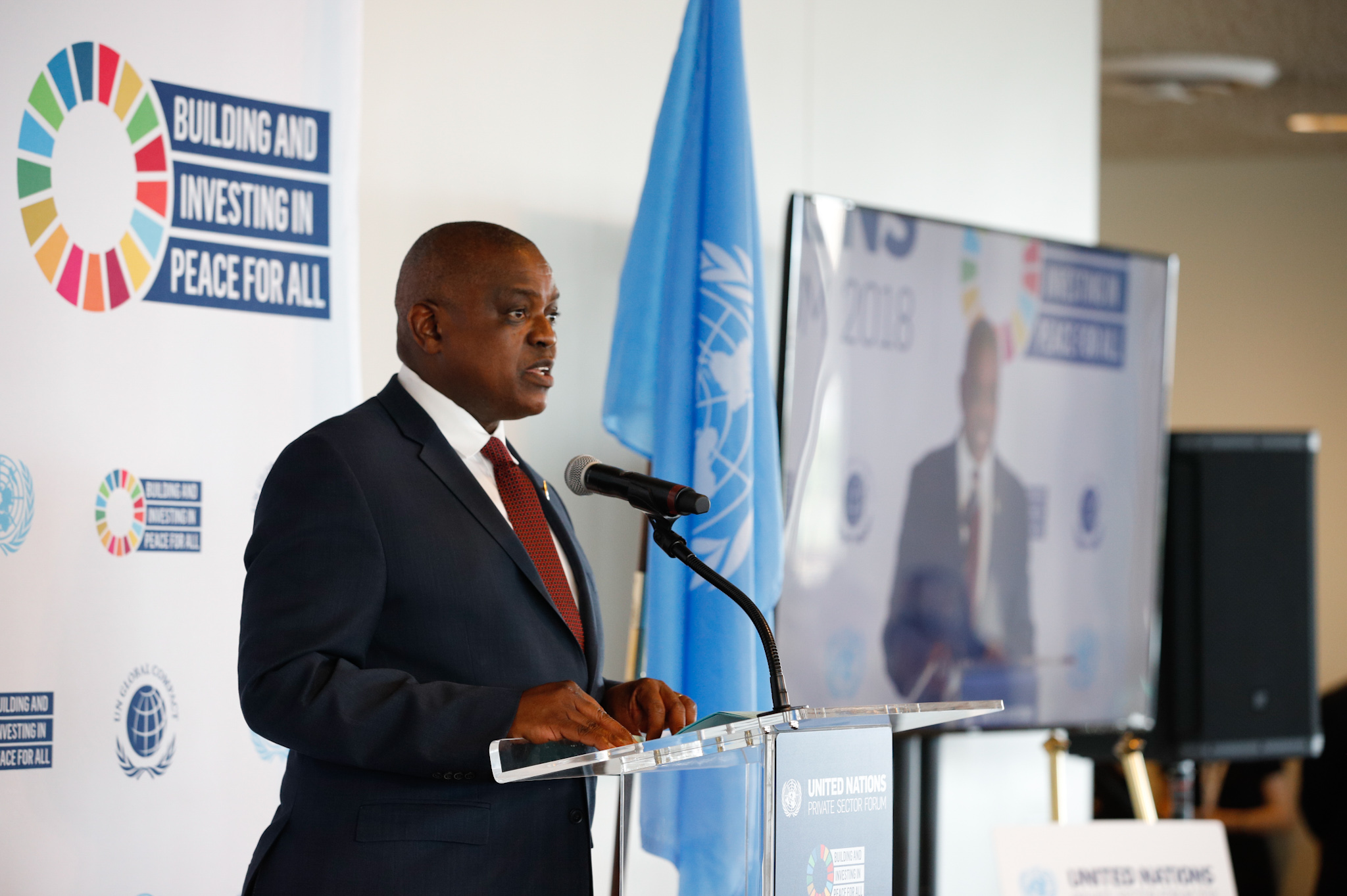
President of the Republic of Botswana, Mokgweetsi Masisi.
Recognizing that peace is ensured by engaging potential agents of conflict to become part and parcel of sustainable development, President of the Republic of Botswana Mokgweetsi Masisi called upon business leaders to take action.
“Business must look beyond short-term profits and recognize that — without respect for the fundamental principles of the United Nations — their very basis to operate will be at risk. Business has a responsibility, indeed an obligation, vis-à-vis sustainable development,” he said.
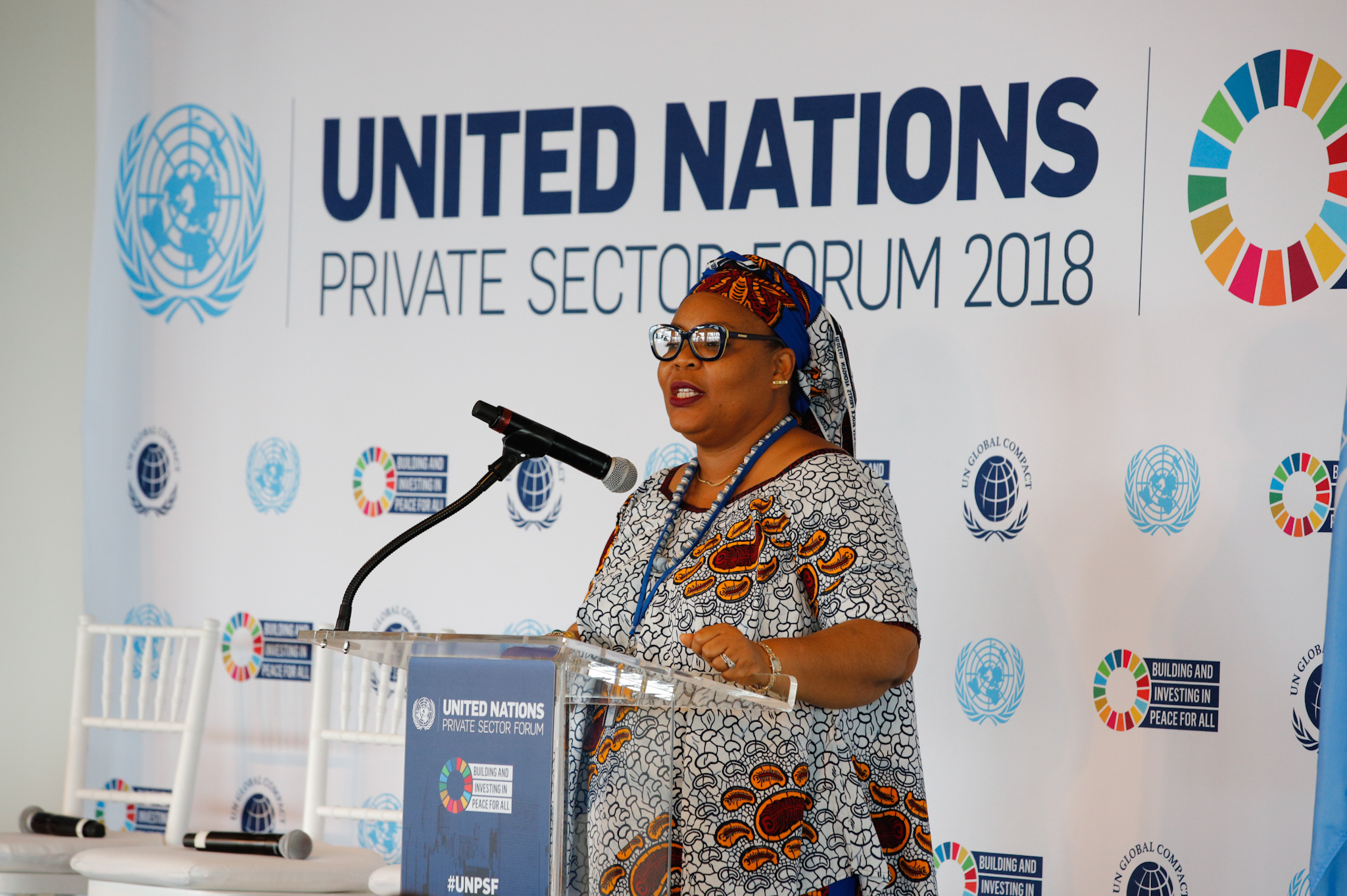
Nobel Peace Laureate Leymah Gbowee, SDG Advocate and Director of the Gbowee Peace Foundation reflected on her experiences in advocating for peace.
Leymah Gbowee, Nobel Peace Laureate, SDG Advocate and Director of the Gbowee Peace Foundation, reflected on her experiences in advocating for peace: “By investing in peace, it means investing in the people that are left on the ground. For all of these Goals to succeed, for all of us to have a world free of poverty, with peace and justice and everything we aspire for as we do our daily tasks, we must invest in people. That’s the highest kind of investment that we can give. Because without that kind of investment we will continue to see wars, we will continue to see hardship and we will continue to see negativity running around our world.”
Demonstrating the increasing engagement from responsible business, the Forum saw more than 60 leading CEOs make over 140 new expressions of support for eight different multi-stakeholder initiatives that advance peace — in areas ranging from peace, justice and strong institutions to humanitarian action to the empowerment of women and the youth.
In addition to these broad announcements of support, the event also featured the announcement of several new commitments and partnerships from Chief Executives representing leading companies around the world. These included:
- Microsoft (Software & Computer Services, United States) announced a new technology-focused initiative called “Artificial Intelligence (AI) for Humanitarian Action,” which will bring the power of AI to the UN family and non-profits around the world, focusing on the needs of children, refugees and displaced people, human rights and disaster relief.
- On behalf of all participants of the UN Global Compact Action Platform on Decent Work in Global Supply Chains, Unilever (Consumer Goods, United Kingdom) announced the release of Decent Work in Global Supply Chains: A Baseline Report, which features a six-tiered commitment from all participating companies in the Action Platform based on a understanding that decent work and economic growth are prerequisites for peace and stability.
- Inspired by a Chinese Government initiative to end poverty in China by 2020, China National Machinery Industry Corporation (SINOMACH) (General Industrials, China) announced that they are establishing an awareness programme to “address poverty in the boardroom”, including by addressing all parts of the value chain that are affected by poverty and instability.
Alongside the Forum, the UN Global Compact also launched a new Action Platform to engage businesses on Sustainable Development Goal 16 to promote peace, justice and strong institutions. The Action Platform will serve as a two-year programme bringing together business, Governments, civil society and UN Agencies to combine their efforts towards achieving a peaceful and inclusive society for sustainable development, the provision of justice for all, and effective and accountable institutions at all levels.
The Forum also featured reflections from Her Excellency María Fernanda Espinosa Garcés (President of the 73rd session of the UN General Assembly), Ndaba Mandela (Founder & Chairman of the Africa Rising Foundation & Founder of the Mandela Project), Sharan Burrow (General Secretary, International Trade Union Confederation [ITUC]), Norihiro Takahashi (President, Government Pension Investment Fund [GPIF]), María Victoria Llorente (Executive Director, Fundación Ideas para la Paz [FIP]), Oryana Awaysheh (Executive Manager, Jerash Garments and Fashions Manufacturing Co. Ltd.) and the actor Michael Douglas (UN Messenger of Peace). The Forum was moderated by Lyse Doucet, Chief International Correspondent for BBC.
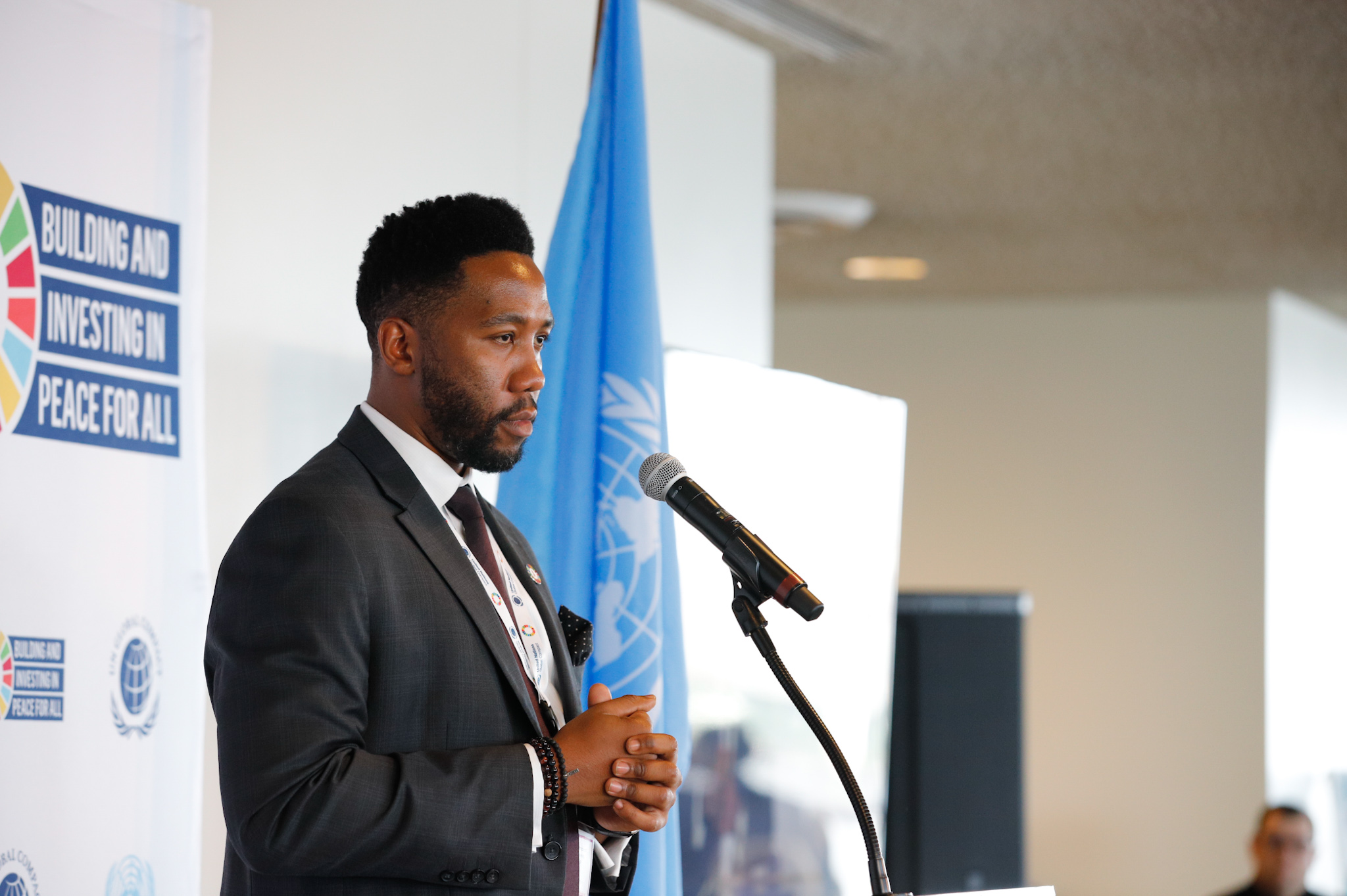 Ndaba Mandela shared his reflections on his grandfather’s legacy.
Hosted by the UN Secretary-General and organized by the UN Global Compact in collaboration with partners, the UN Private Sector Forum has provided an annual opportunity since 2008 for businesses to make commitments to contribute to the global sustainability agenda. In conjunction with this year’s Forum, the UN Global Compact followed up on 21 commitments made by organizations as part of the 2016 Forum to track progress, discuss challenges faced along the way and identify ways in which the commitments are being transformed to advance the 2030 Agenda.
- Learn more about eight multi-stakeholder initiatives that are advancing peace
- Read the check-in on commitments made at the UN Private Sector Forum 2016
- Explore the guide to Building Peace and Prosperity: What Business Can Do
- Read the Decent Work in Global Supply Chains: A Baseline Report
- Watch the recording of the UN Private Sector Forum 2018 Live Webcast
- Discover more about the UN Private Sector Forum 2018